

The Local newsletter is your free, daily guide to life in Colorado. For locals, by locals.
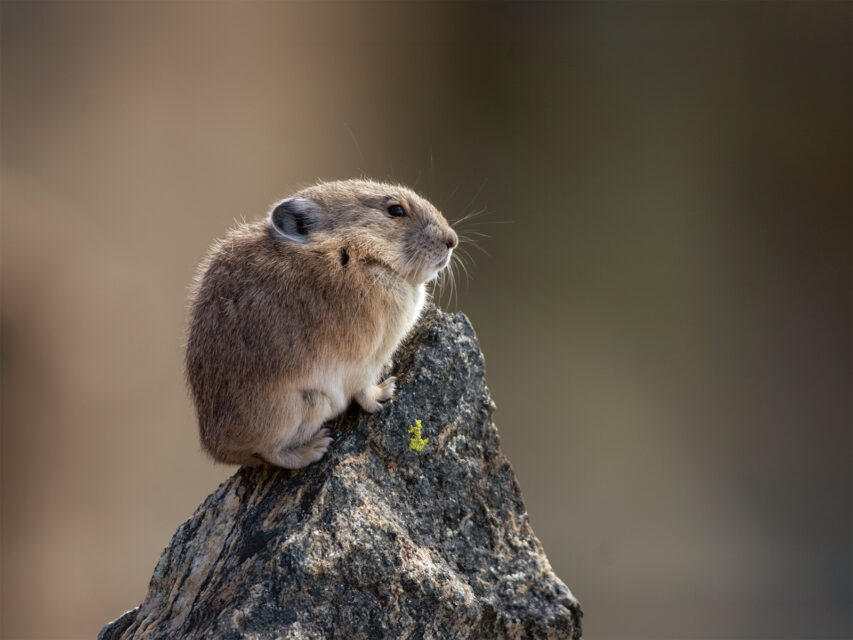
If you’ve hiked through a Colorado boulder field, you’ve probably encountered a pika perched on a rock, emitting a high-pitched squeak. But these adorable mammals are more than treeline’s welcoming committee. “If we’re starting to see declines in pika as the climate is changing,” says Julie Krajewski of the Denver Zoo Conservation Alliance, “that would be an indication that it’s affecting other species” that are harder to monitor, like lynx and wolverines.
So when University of Colorado Boulder ecologist Scott Ray published a study this past November that showed a nearly 50 percent decline since the 1980s in juvenile pika populations at a site near Nederland, scientists sounded the alarm. Pikas spend the summer collecting around 62 pounds of vegetation each for haypile caches that sustain them underground all winter. “If it’s too warm out for them to safely go and gather that vegetation, they could starve over the winter,” Krajewski says. “And if the snow melts too much and it doesn’t provide insulation, they can freeze to death.”

With this year’s record-low snowpack, Krajewski is anxious to find out how Colorado’s colonies have fared—and that’s where the Colorado Pika Project, a collaboration between the Denver Zoo Conservation Alliance and nonprofit Rocky Mountain Wild, comes in. Since 2010, the group has been monitoring pikas with the help of volunteers trained to look for haypiles and scat. But any peak bagger can contribute by using the four-year-old Pika Patrol app to log their sightings—or troublingly silent ascents.
Read More: 6 Animals That Came Back From Extinction in Colorado