

The Local newsletter is your free, daily guide to life in Colorado. For locals, by locals.
Growing up in Bailey, Robert Colwell loved to chase butterflies. When he managed to catch the fluttering critters, his mother would show him how to preserve them. A lamp shade she decorated with pressed, dried wings still illuminates his living room today.
Decades later, Colwell marvels at how far his passion for insects has taken him. In 1966, it led him to the steamy rainforests of Costa Rica, where the University of Colorado Boulder entomologist (official title: museum curator adjoint of entomology and zoology) often traveled over a 40-year career studying insect diversity.
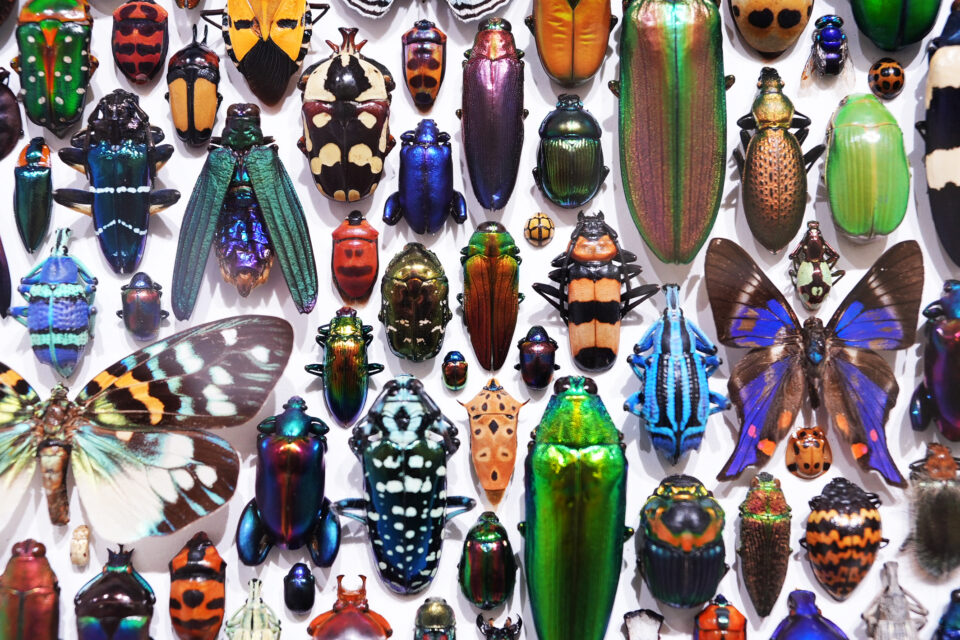
Now Colwell and his colleagues have published a paper that has the rest of the entomology world buzzing: They’ve found that the planet likely has three times as many insect species as previously thought, for a dizzying total of 14 to 20 million kinds of bugs. (Previously, six million was the accepted number.) Only about five percent, or one million, of all insect species are thought to have been identified and named by scientists—suggesting that we’re just beginning to scratch the surface of all there is to learn about creepy crawlies.
To come up with the new estimate, researchers traveled to northwestern Costa Rica, where they studied more than 5.3 million specimens, collecting some in traps and raising others in captivity. Then they used sophisticated statistical modeling techniques, as well as a method called DNA barcoding, to estimate how many unique species were represented. Most of them, Colwell explains, are not the butterflies, caterpillars, and other big bugs you may be used to seeing. Instead, tiny flies and parasitic wasps (which, horrifically, lay their eggs inside caterpillars; the larvae then devour their hosts from the inside out) make up the bulk of the number.
For a long time, many scientists have thought beetles are the most diverse order of insects, in part because Charles Darwin studied them extensively. When biologist J.B.S. Haldane was asked what he’d learned from studying bugs, he famously quipped, “God must have an inordinate fondness for beetles.”
“But now,” Colwell says, “we know he should’ve said that God had an inordinate fondness for tiny wasps and flies.”
Why are there so many insects in the first place? “A vast majority of the millions of insects are very tiny and very locally distributed,” Colwell says, allowing them to become extremely specialized to their environment. Each parasitic wasp species has evolved to prey on only one or two kinds of caterpillars, for example. The warm, wet tropics are home to the highest density of species on Earth, but that doesn’t mean cool, dry Colorado is devoid of bugs.
“I did my dissertation on insects in Colorado in the leaf litter at different elevations, up at 10,000 feet near Guanella Pass, and there’s incredible diversity of these tiny flies,” Colwell says. “Nobody knows how many insect species there are in Colorado, but we’ve certainly got a lot of them.”
While the study imparts a sense of wonder and awe at the sheer diversity of insect life on Earth, it’s also a sobering reminder of just how much we stand to lose. At least 40 percent of all insects are threatened by extinction, and numerous studies have found that the “insect apocalypse” is already well underway. These small but mighty creatures play a crucial role in the environment: They pollinate plants, help control invasive species, and serve as meals for many other animals.
Colwell and his colleagues hope that their research will draw attention to that crisis, which is primarily caused by humans: Habitat loss, pesticide use, climate change, and light pollution are just a few of the threats to insects worldwide.
“There could be many species that are declining that we haven’t even discovered,” said Colwell’s co-author, Cornell professor Laura Melissa Guzman, in a press release. “We cannot protect species if we don’t know that they exist.”