
The Local newsletter is your free, daily guide to life in Colorado. For locals, by locals.
Although the trial of former Colorado Bureau of Investigation (CBI) forensic scientist Yvonne “Missy” Woods is winding down, with her sentencing scheduled for September 8, the fallout from her misconduct is just beginning to be revealed.
In April 2025, the Denver Crime Laboratory (DCL), the Denver Police Department’s forensic science division, initiated a review of 422 Denver sexual assault cases handled by Woods throughout her career. (The department later expanded the review to just over 1,300 cases.) Initially, CBI recommended that DCL re-test only three Woods cases it deemed “high-risk,” wrote Denver Police Department spokesperson Doug Schepman in an email to 5280. The laboratory chose to test 10 additional cases.

On August 27, the Denver Police Department disclosed to 5280 that of those 13 cases, 11 returned DNA profiles eligible to be entered into the Combined DNA Index System (CODIS), a national database that law enforcement agencies use to compare DNA profiles. Six of those 11 matched to potential suspects or other criminal investigations, Schepman wrote—evidence that could now be used to pursue prosecutions. (The Denver Police Department declined to share details about the cases because they remain active criminal investigations.)
In January 2025, Woods was charged with 102 counts related to 58 instances of alleged criminal misconduct from 2008 to 2023. (Woods worked at CBI from 1994 to 2023.) There’s no evidence that Woods falsified DNA matches during her tenure at CBI. Rather, Woods admitted to an internal affairs investigator in 2023 that she took shortcuts during testing—including deleting data that showed low levels of male DNA that would require further testing. In more than 30 sexual assault cases, Woods reported that there was “No Male DNA Found” when, in fact, there were small amounts present or there was possible contamination, according to the internal affairs investigation.
This past June, Woods pleaded guilty to four felony charges stemming from her criminal misconduct at CBI: cybercrime, perjury in the first degree, attempt to influence a public servant, and forgery. She’ll receive a minimum of eight years in prison and up to 16 during her sentencing hearing on September 8.
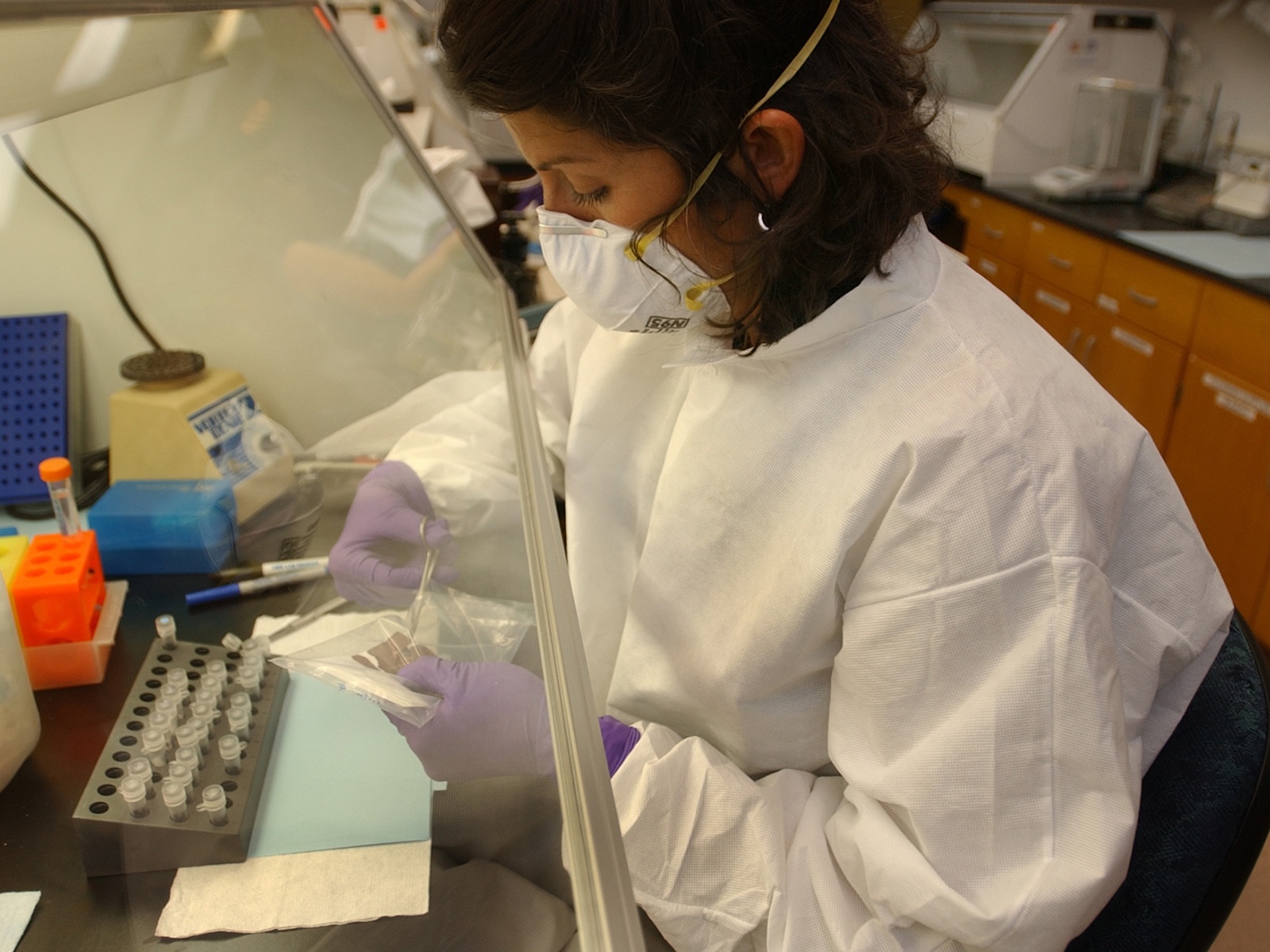
The revelation of Woods’ malpractice has cast doubt on every case she touched. CBI says it conducted an extensive forensic review of her work and identified 1,045 cases impacted by her data manipulation. But all that time spent re-examining Woods’ work exacerbated another growing issue at CBI: an unprecedented rape kit backlog.
At the height of the backlog, in February 2025, there were 1,462 kits awaiting testing. Sexual assault survivors waited more than 500 days on average to receive results. The bureau has been chipping away at the queue, but as of this month, the average turnaround time is still 186 days. (CBI’s goal is 90 days.) CBI has made clearing the backlog an “operational priority” and reports that it’s on track to hit its 90-day turnaround target in November—but that doesn’t take into consideration any additional re-testing of Woods’ work.
Given the findings of these 13 cases, the Denver Crime Lab could choose to re-test more of the 1,300 kits under its review. “The DCL will continue to independently evaluate additional Denver sexual assault cases for re-testing and will coordinate with CBI to ensure accurate scientific results throughout the process,” Schepman wrote.
Kelsey Harbert, a sexual assault survivor and co-organizer of a GoFundMe to help clear Colorado’s rape kit backlog, hopes that these findings will lead to the re-testing of every sexual assault case Woods handled during her career.
“How are we having any other conversation than, CBI needs to stop everything it’s doing and retest all of her work?” Harbert says. “Every victim’s case, whether it’s a conviction or it’s an ongoing case—[Woods’ misconduct] puts all of them at jeopardy because you can’t say definitively how many cases she deleted evidence for and she cut corners on that should have turned out differently.”
In a statement to 5280, CBI says it welcomes any new leads in sexual assault cases but argued that DCL’s findings don’t necessarily indicate misconduct. Instead, the agency claims the original DNA testing for these 13 cases took place an average of 10 years ago and advancements in forensic science could be the reason DCL scientists were able to pull a DNA profile now: “While the existence of a new DNA profile does not, by itself, indicate misconduct, analytical failure, or an incorrect conclusion in the original examination, any opportunity to crack down on perpetrators of sexual assault is important.”
Harbert took issue with the implication that these new findings are a result of technological advancements rather than a consequence of Woods’ misconduct. “That’s embarrassing, and it’s insulting for survivors and taxpayers for you to say something like that,” Harbert says, adding that she believes CBI has yet to fully reckon with Woods’ offenses, which only perpetuates their consequences. “Every day that goes by, another person is at risk of being assaulted, another case is at risk of being dismissed, and another conviction is at risk of being overturned.”