

The Local newsletter is your free, daily guide to life in Colorado. For locals, by locals.
In 2025, Mike Chambers and his wife planned to sell their North Boulder house and move their family to Costa Rica to enjoy a slower pace of life. To avoid commissions, he handled the transaction without a real estate agent. How complicated can this be? thought Chambers, a serial tech and nonprofit entrepreneur. Very, it turned out. Chambers’ frustrations with the solo-selling experience, documented via the Instagram account @realtorshateme, garnered tens of thousands of views, a writeup in the New York Times, and messages from both consumers and agents who were similarly peeved by the traditional real estate model.
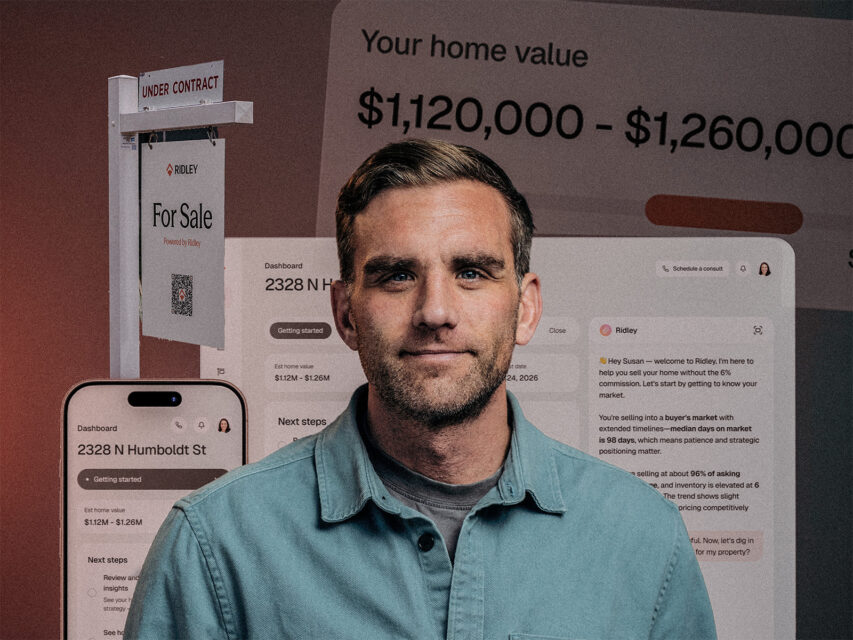
The response convinced Chambers to focus on a new venture: Ridley, an AI-driven website whose base plan (starting at $1,499) helps sellers price their properties, build and share their listings, field buyer interest and offers, and create contracts and closing documents. Its upgraded plan ($3,999) connects sellers with a licensed agent who handles strategy, negotiations, and closing.

Here, the Ridley CEO shares how he aims to compete with human real estate agents, the challenges of keeping up with AI, and what’s next for the startup.
Read More: The 25 Best Neighborhoods in Denver in 2026
Editor’s note: The following conversation has been edited for length and clarity.
5280: You launched Ridley a year ago. How’s it going?
Mike Chambers: We’ve sold over 250 homes, and the average Ridley seller is saving $43,000 per transaction. One of the hardest parts about building software these days is you have to meet people where they’re at now but also be able to build toward where things are going—and we don’t really know where things are going. There are times when I feel like I’m staring into the abyss, and I’m like, Oh, my God, even the work I’m doing is going to be replaceable.
Yeah, there’s a lot of trepidation around AI. What’s your take?
I do believe that there could be a mass displacement of white-collar workers over the next five years because these models are improving so fast. But there will always be a need for humans as part of this.
How does that sentiment apply to the real estate industry?
I don’t think agents will be completely eliminated, but their roles will change. We’re going to move from a world where the agent is the center of the transaction to a world where the platform becomes the center of the transaction and agents come in for the high-stakes moments.
We want to use AI to automate a lot of the procedural and coordination work to make it easy for an everyday consumer to navigate but also give them the ability to call on an agent when they want strategic advice. Real estate is an emotional process…you might still want someone there to support you.
What’s next for the company?
We’re going really deep on the seller side of the transaction, and our goal is to have a buyer side by the summer. We are also working on an agent platform—the higher vision is a consumer marketplace where both sides of the transaction can navigate the process.
I notice you’re not living in Costa Rica right now.
[Laughs] It’s a hot topic at our house. When I started getting calls from investors and decided I was interested in doing this, we were able to talk to the buyers of our home and get out of the contract. We still have our land [in Costa Rica]. We’re going to play it by ear and see how things go.
Read More: This Colorado-Born AI Tool Can Spot Problems With Houses Before Your Inspector Does