
The Local newsletter is your free, daily guide to life in Colorado. For locals, by locals.
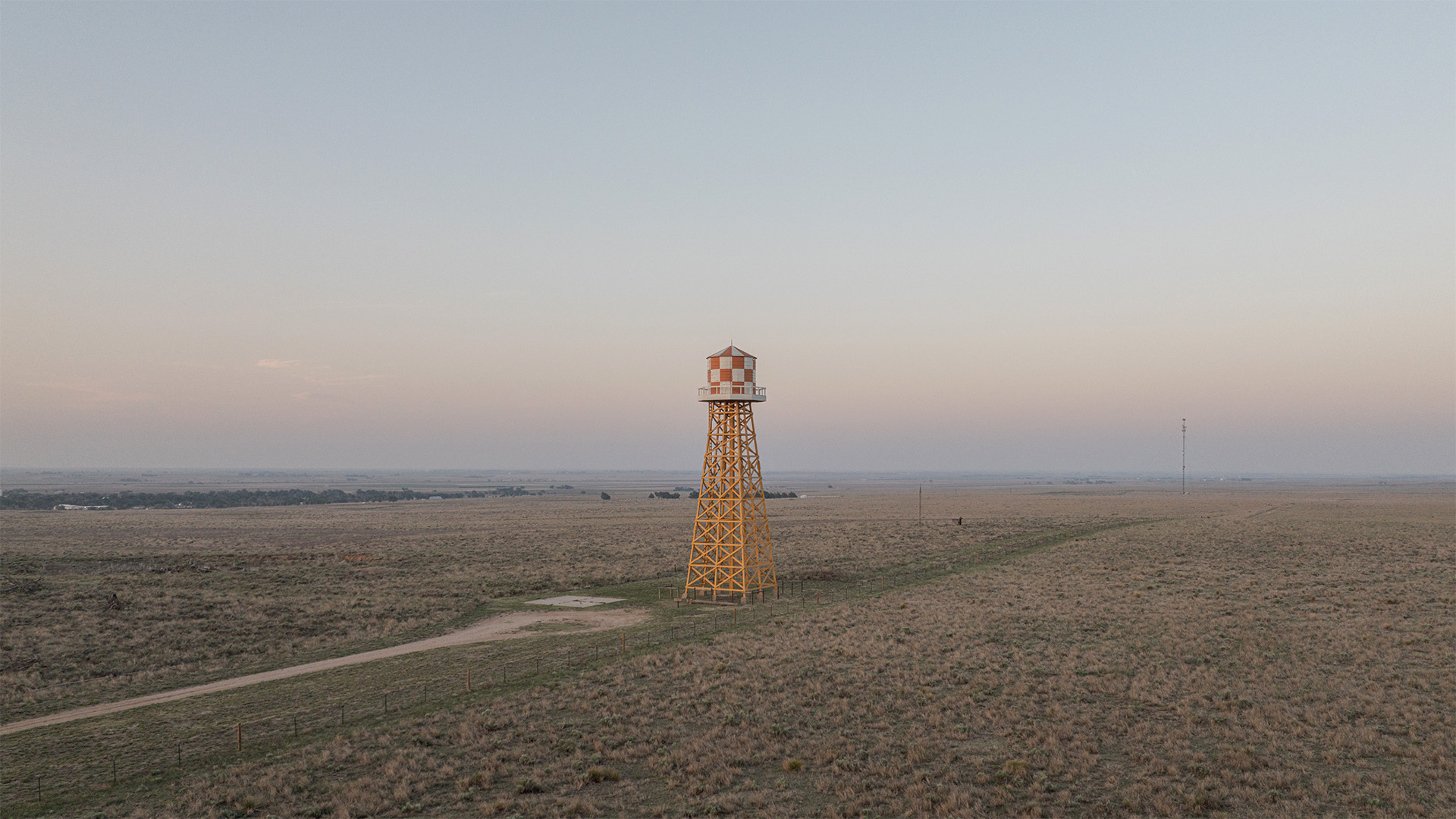
On a Saturday morning this past May, some 150 people gathered in a quiet corner of Colorado, just minutes shy of the Kansas border. Some had traveled for days to be there; others had arrived by way of a four-hour bus ride from Denver. As the temperature pitched toward the 90s, they clustered in what shade they could find and talked in hushed voices. Though it’s hard to see it through the sagebrush that now blankets the land, Colorado’s 10th-largest city once stood here. That city was also a prison, and the lives of more than 10,000 Japanese Americans became tied to this place during World War II.
Survivors returned years later with one simple request: Can we remember what happened here? For decades, the answer to that question was no.

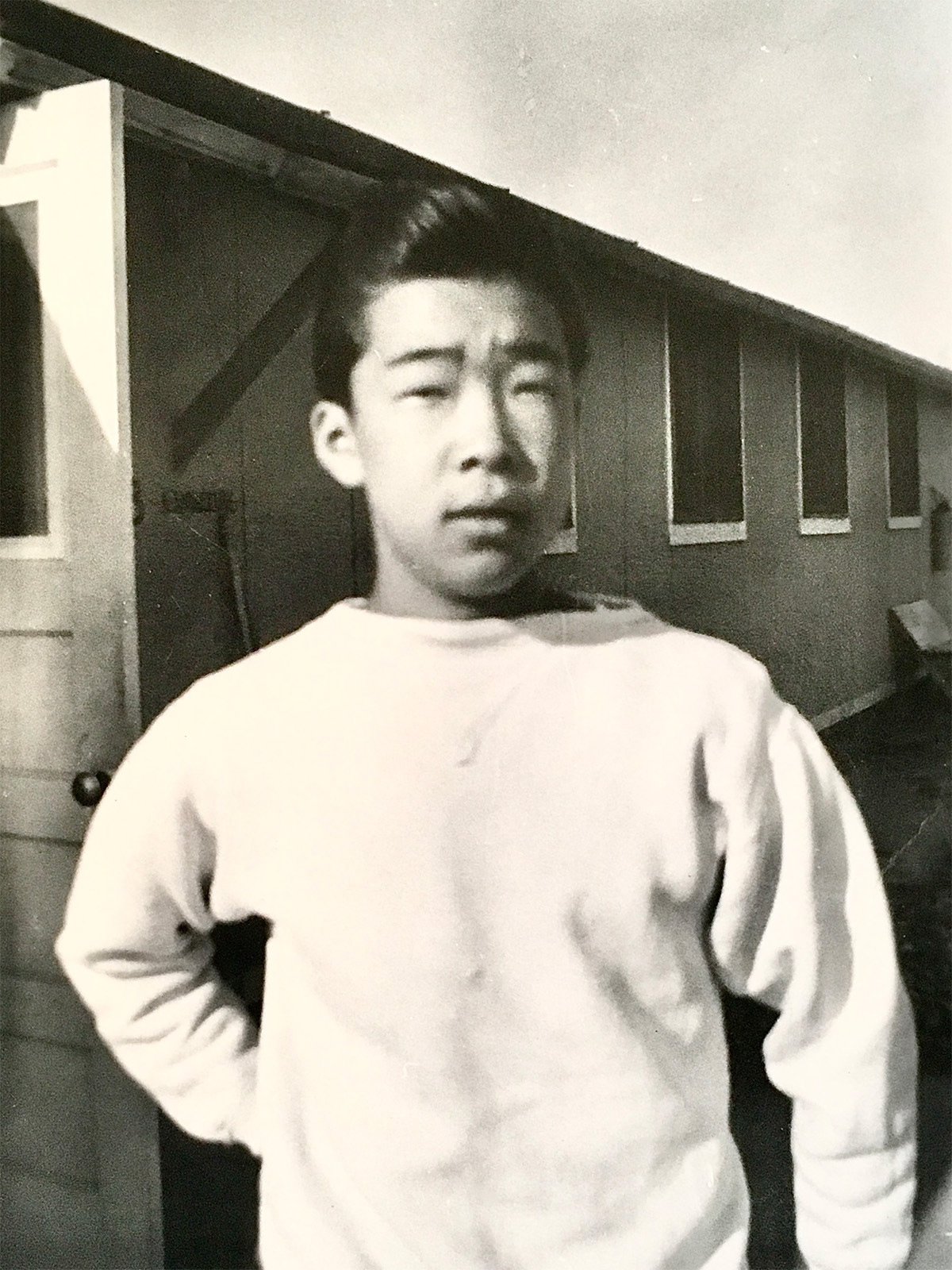
When 12-year-old Thomas Shigekuni first laid eyes on the denuded grassland that would become his home, all he could think was: What is this? Is this it? This is in the middle of nowhere.
Rural Colorado was a stark change from south Los Angeles, where his family, which included his parents and two older brothers, ran a chain of successful plant nurseries that kept them financially secure throughout the Great Depression. He had a simple life, taking judo and Japanese language after school. But the Japanese attack on Pearl Harbor on December 7, 1941, set off a chain of events that would strip Shigekuni of his home and all that had been familiar. Almost 70 years later, Shigekuni still remembered how a classmate accosted him at school, saying: “You guys attacked Pearl Harbor!”
Propaganda and paranoia enveloped the nation. Caving to pressure from military leaders who claimed that Japanese Americans were “enemy aliens” and that mass incarceration was necessary, President Franklin D. Roosevelt signed Executive Order 9066 into law on February 19, 1942. The order paved the way for more than 120,000 people in America of Japanese descent—two-thirds of whom were U.S. citizens—to be stripped of their rights and removed from their homes. Those affected lived across a wide swath of the country, from coastal Washington through southern Arizona. Military police posted Civil Exclusion Orders, neighborhood by neighborhood, over the next few months, giving Japanese Americans one week to make arrangements for their possessions and report for removal. They were issued a date of departure but not one indicating when, or even if, they would be permitted to return home.
The Shigekunis sold their nurseries at a loss and packed up their belongings. They were first imprisoned at Santa Anita Park, a racetrack northeast of LA, where some detainees slept in horse stalls and the stench of manure permeated the makeshift prison. Meanwhile, the federal War Relocation Authority set about hastily building 10 residential prison facilities—alternately called “relocation centers” and “concentration camps” in official communications of the era—in remote parts of the country. Located on the far western edge of the Great Plains, Colorado’s Granada War Relocation Center, better known as Amache, was the smallest.
Hailing largely from central and Southern California, many in the camp’s population had never seen snow nor dealt with the punishingly dry heat of High Plains summers. The barracks that awaited them lacked insulation and did little to keep the outside from coming in. Atop land that had been scrubbed of vegetation to make way for the camp and in a region still haunted by the Dust Bowl, the slightest gust of wind could conjure a sandstorm. “[I]f we’re caught outside in it we’re nearly blinded,” an incarceree named Henry Fujita wrote in a letter to friends back home soon after arriving in October 1942.
Indignities became the new normal for the three years Amache was open. Entire families lived in single-room residences; open shower and toilet facilities meant people had to share even their most private moments with others. In the early days, guards staffed the towers around the clock with their guns trained inward.
Shigekuni, typically verbose in interviews, had just one word for the food: “Bad.” A reviled dish called “weenie royale” made regular appearances on mess hall menus. Poor refrigeration and untrained chefs led to mass outbreaks of food-borne illnesses. Some, including Kyushiro Homma, refused to eat. Before the war, Homma had been a popular Hollywood dentist whose oeuvre, according to his grandson, included correcting Shirley Temple’s overbite. While his smiles were winning the hearts of America, Homma lost 30 to 45 pounds and suffered a stroke and cardiac arrest. He died at 44, leaving behind his wife and three young children.
Still, Japanese Americans did what they could to make Amache home. Shigekuni remembered incarcerees collecting money to buy fast-growing Siberian elm saplings from a nearby nursery, then planting them for shade and as wind breaks alongside the barracks. Amache’s population included talented agrarians from California’s Central Valley who transformed tired beet and melon fields into a high-yield agricultural enterprise. In 1943 alone, they harvested some four million pounds of vegetables, generating enough surplus that they were able to send produce to other War Relocation Authority camps as well as to the U.S. Army. Incarcerees built ornamental gardens and cultivated a variety of rose so tough that it still blooms untended more than 80 years later. They ordered hair dye, sake, eye drops for hay fever, and condoms from the Japanese-owned T.K. Pharmacy in Denver. (One of Shigekuni’s formative camp memories is of seeing a friend working to clear a sewer system that had become clogged with the prophylactics.) Amacheans started a screen-printing shop, a co-op, and an art school. Many carried on because they had no other choice, but “there was a fine line between hope and despair on a daily basis,” Amache survivor Henry Okubo would later tell his son.
Shigekuni and his family were assigned to a single room in a barrack on the far southern edge of camp, adjacent to a guard tower and the camp’s makeshift Buddhist church. Shigekuni was a pensive kid and, in a photo taken with his family just after their arrival, stylish in a leather bomber jacket and slicked-back black hair. Despite his young age, he was keenly aware of the injustice his community had been subjected to and dedicated himself to committing small acts of resistance. In essays for the camp’s school, he railed against the actions of the U.S. government and the Japanese American Citizens League, a civil rights organization he felt was “pandering to the whites” due to their controversial wartime tactics to prove loyalty. During the daily recital of the Pledge of Allegiance at school, he muttered his own ending under his breath: “…with liberty and justice for all except us Japanese Americans.”
Outside the camp, the narrative about the incarceration was being revised even while it happened. A spread in an October 1942 edition of Newsday used a racial slur to proclaim that the Japanese had “invade[d] Colorado Valley.” The newspaper juxtaposed the incendiary text against photos of smiling Japanese Americans and claims that “few showed any disposition to grumble.” A sample mess hall menu included with the article suggested that Amacheans were feasting on roast beef with gravy, fresh fruit, and bacon with their eggs every morning.
Media coverage like this did not land well with locals who were curbing their own diets due to wartime rations. The camp was particularly unpopular in the Arkansas River Valley, where many already resented the U.S. government for abandoning them during the Dust Bowl and Great Depression. The federal government added to their grievances by using the power of eminent domain to condemn and then claim much of the land upon which Amache was built. Landowners received pennies on the dollar for their properties, and the tenant-farming families who rented the land, many of whom were poor immigrants from Eastern Europe and Mexico, lost homes and livelihoods without compensation. With its new high school and rumors of rich foods, life inside the concentration camp looked like luxury to some.
Still, the town of Granada, less than a mile from the camp, had little choice but to settle into what Shigekuni called “a gigantic marriage of unwilling participants” with the prison that shared its name. (The informal “Amache,” the most common moniker used by the survivor community, is taken from a Cheyenne woman, Amaeohtse’e Ochinee Prowers, a prominent figure in the Arkansas River Valley during the late 19th century whose father had been killed during the Sand Creek Massacre.) As the war plodded on, the boundaries between Granada and Amache grew thinner. Realizing their wards posed no threat, administrators started granting Japanese Americans farmwork releases and day passes to travel to Granada and nearby Lamar for goods not available inside the camp. Granada did not have a movie theater, so residents would attend film screenings—including one particularly on-the-nose feature, Love Thy Neighbor—in Amache’s recreation hall.
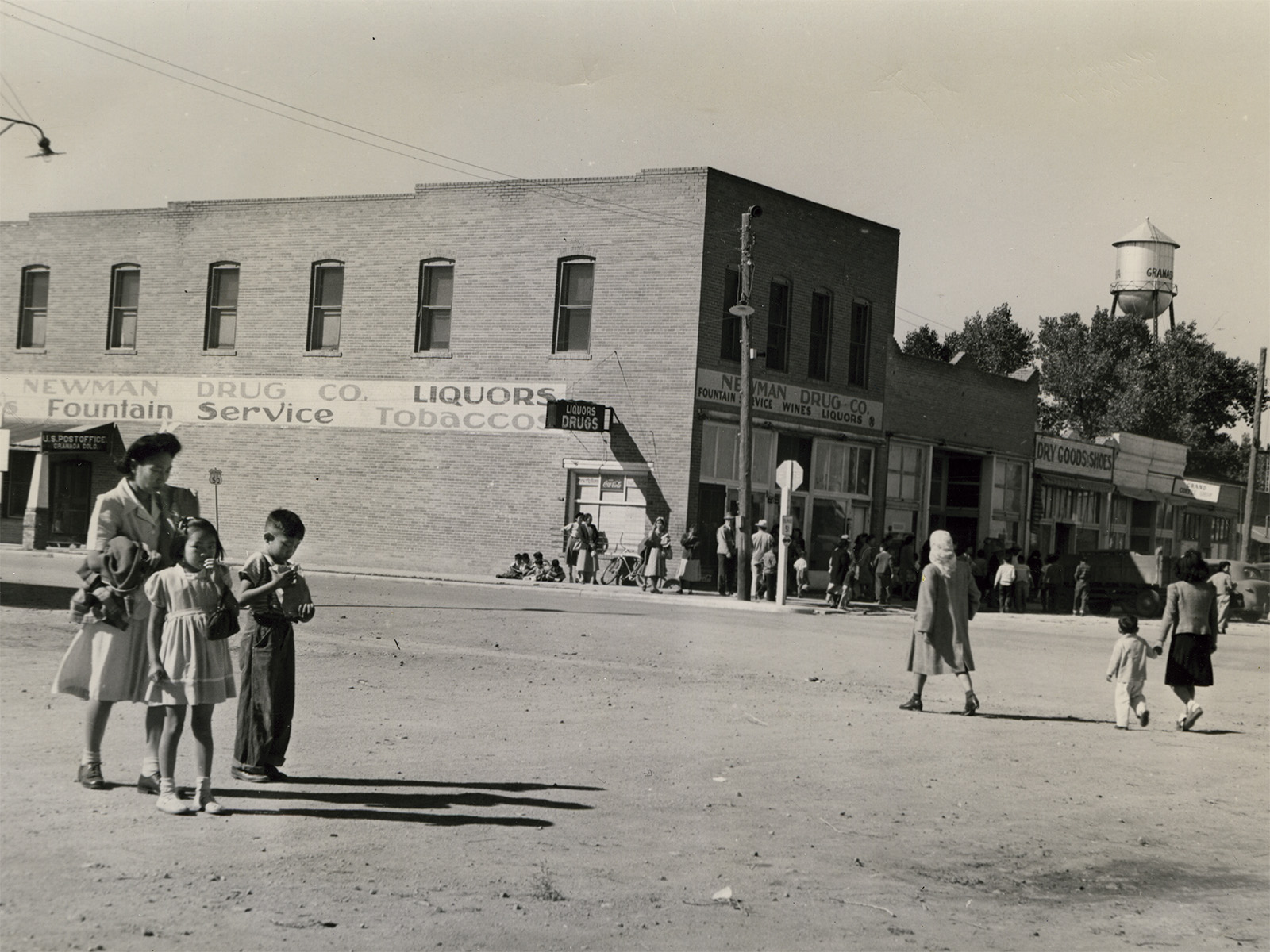
This modicum of freedom helped buoy morale for some incarcerees, and local businesses benefitted from the sudden influx of new customers. But Shigekuni recalled the relationship as being “strained to say the least.” Japanese Americans had to contend with higher prices at stores, local park bans, and other forms of discrimination. At one point, Shigekuni was stranded 17 miles away from the camp when a bus driver in Lamar refused to let him board. “Those things I remembered, and they seared in my memory,” he said in a 2001 interview with Westword.
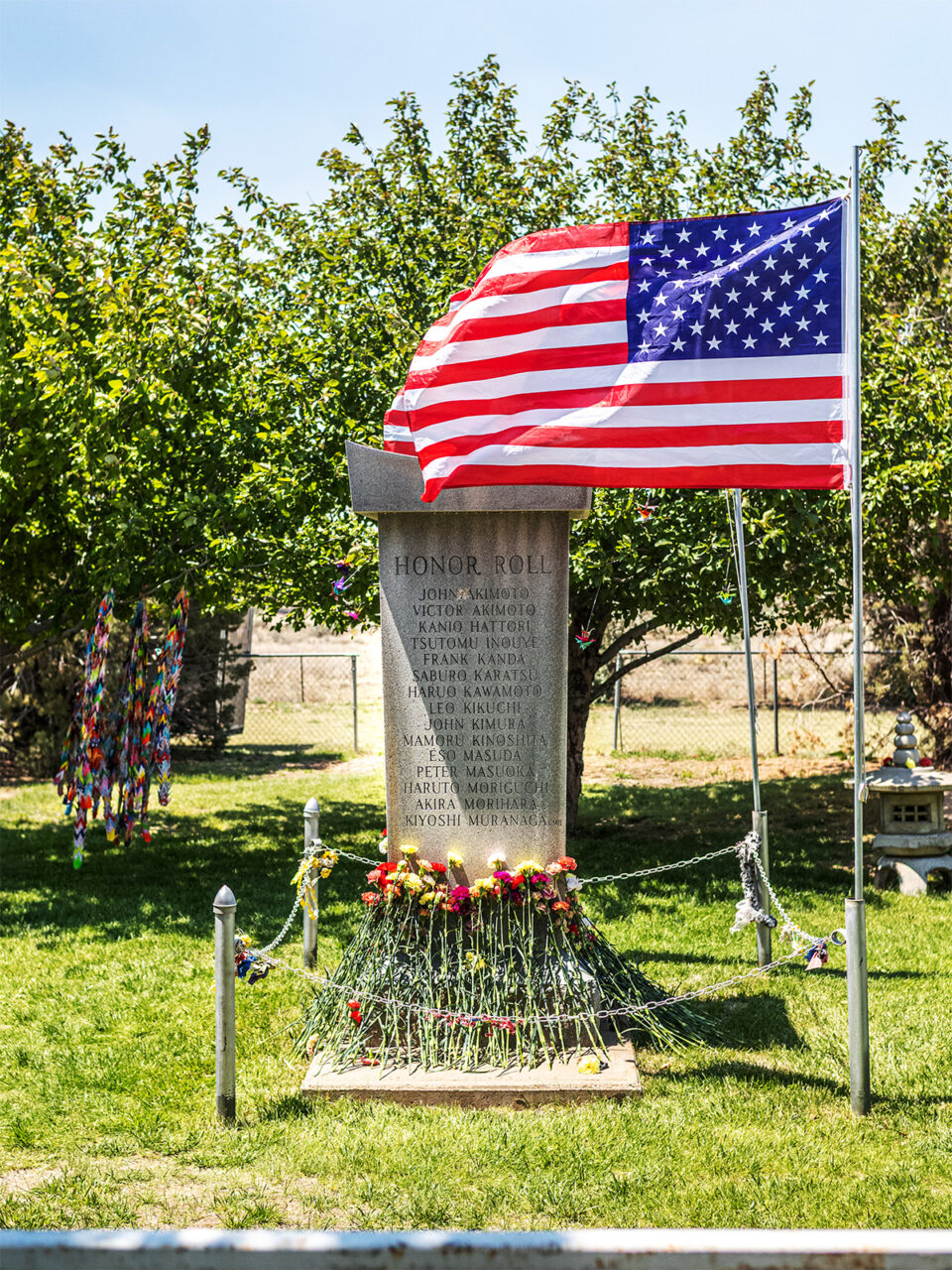
When the war ended in 1945, Japanese Americans yet again faced the loss of home and community. They were each given $25 and a bus ticket. Many had nothing to return to and dispersed to places like Chicago and Salt Lake City. Around 4,000 Amacheans stayed in Colorado, at least temporarily. Before they left the camp, a group of incarcerees built the site’s first memorial: a small brick shrine next to the cemetery. Inside, they placed a granite monument inscribed with kanji script and a wooden honor roll bearing the names of Amache servicemen who had been killed while fighting for the country that had imprisoned them.
Amache was left to dust and ruin. Barracks were lifted off their foundations and sold by the War Assets Administration for use across the region. The city of Granada purchased the land from the government; wells dug to supply water for the camp became, and remain, the town’s primary water source. Sand-prairie scrub slowly reclaimed the landscape. Compelled by trauma, shame, and government-led assimilation efforts, a cloak of silence fell upon many Amache survivors too.
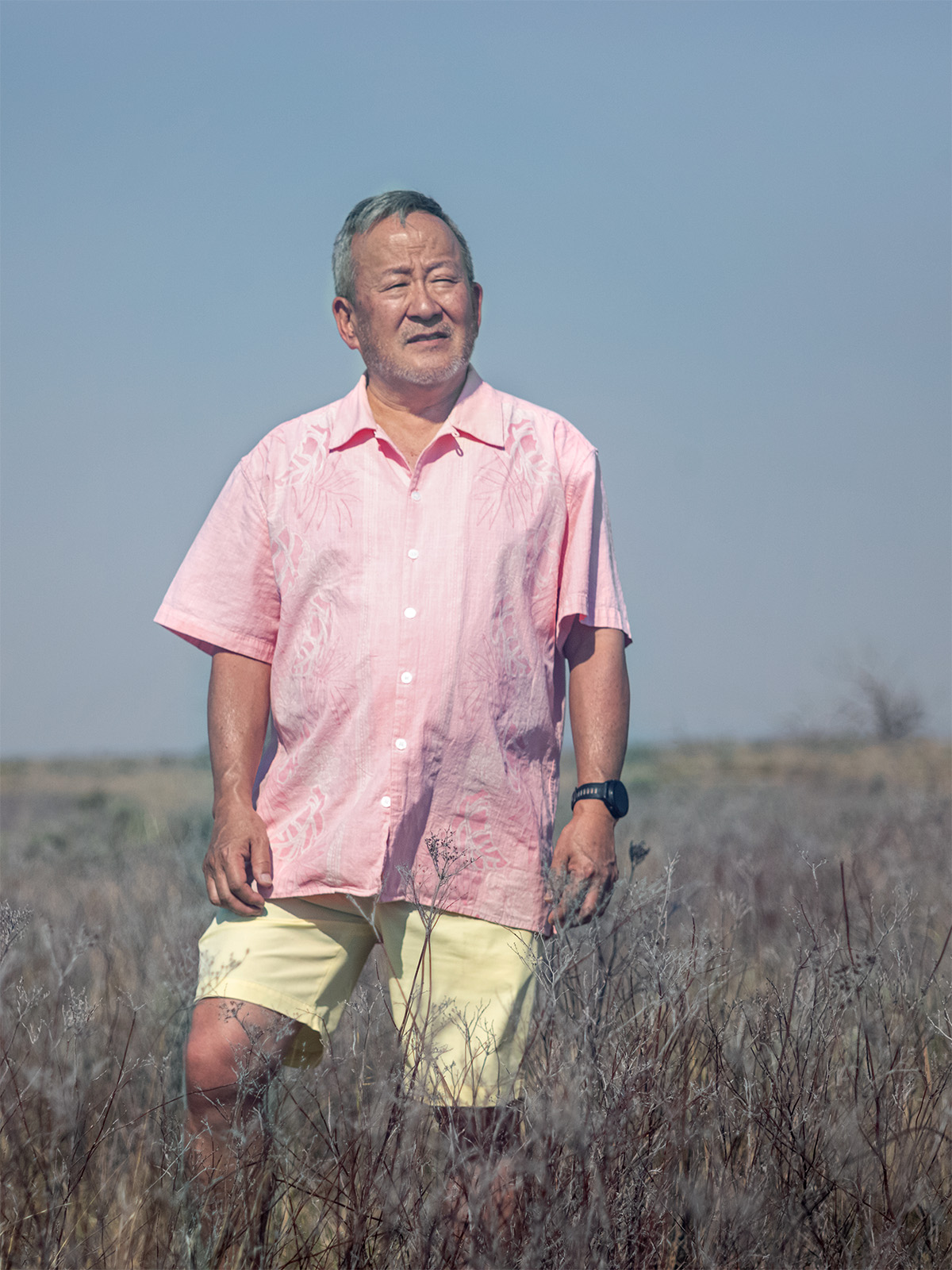
After leaving Colorado, Shigekuni eventually found his way back to Southern California, where he attended Pepperdine University, started a family, and opened a nursery like the one his parents had owned before the war. Seeing a need for greater legal support in the industry, he went to law school and opened a practice in Torrance, California. He moved on with his life, but his time at Amache stayed with him—and he wanted others to remember it too. In photos and old video recordings, Shigekuni is a slight and serious man, his mouth a short, straight line inclined to turn downward into a frown, especially when recalling memories of his youth. “It’s just like it’s in concrete…. He can’t get over it,” said his wife, Ruth, who was incarcerated as a child in Idaho’s Minidoka camp.
He first returned to Granada in 1970 to begin plotting out a location for a historical marker to memorialize the camp. Shigekuni later partnered with his former Amache schoolmate Minoru Tonai and other California-based survivors to form the Amache Historical Society to “perpetuate the memory” of the camp and prevent similar injustices. “He was the very first person I know to talk of resurrecting Amache,” Tonai said, and “his ulterior motive [was] to make sure that no one else suffered the way we did.”
Momentum was building in Colorado too. In 1968, Japanese Americans started a Denver chapter of the civic group Optimist International to organize grassroots preservation at Amache. Five years later, Russell Endo, the child of survivors of Arkansas’ Jerome concentration camp, moved to the state for a faculty position in the University of Colorado Boulder’s Department of Sociology. The first time he visited Amache, “I felt this real rush of emotions,” he would later say. “People talk about this, about the power of place. Standing there, you sort of feel this energy radiating into your body from the surroundings.”
Endo was so moved by the experience that he took his students back, then, with Manzanar concentration camp survivor Marge Taniwaki, set about organizing the first community pilgrimage to the site in 1975. They secured a $1,000 grant from Colorado’s Centennial-Bicentennial Commission and began planning what would become the state’s only official Asian American event in honor of its 100th birthday. Like Endo, Taniwaki, a community organizer, was deeply moved after visiting Amache but also troubled by what she saw. The monument that incarcerees had erected before they left was pocked with bullet marks. Endo and Taniwaki helped former incarcerees locate the foundations of the barracks they had once called home. Both recalled survivors’ surprise at how big the Siberian elm saplings they’d planted had grown.
While Japanese Americans were beginning to grapple with their past, no such reckoning was underway in Granada. On the contrary, residents seemed determined to bury—or at least rewrite—the story of the place that locals still referred to as the “J– Camp,” according to Westword. A commemorative booklet published in honor of the town’s centennial anniversary in 1973 cast such a sunny light on Amache that, Shigekuni wrote, “one would wonder why anybody would ever want to leave that place.”
Still harboring resentment over the land seizure and rumors that incarcerees were coddled, Granada leadership grew increasingly vocal in their opposition to Amache preservation efforts throughout the 1980s. A particular flashpoint centered around a monument that survivors wanted to erect at the Amache cemetery. The proposed marker referred to the site as a concentration camp. For Shigekuni and some of his compatriots, this wording was not only historically accurate but also a critical move away from widely used euphemisms like “relocation,” “evacuation,” and “internment,” which refers to the detention of foreign nationals and obscures the reality that the United States had violated its own Constitution when it detained citizens en masse.
Henry Okubo, the Amache survivor and a leader of the Denver Central Optimist Club, recalled that the first meeting with the Granada Town Council about the monument “ended in a shouting match.” Granada’s mayor at the time, Lawrence McMillan, was nine years old when he and his tenant-farming family were evicted from their homes to make way for Amache. Bitterness over that loss reverberated throughout a 1983 letter that McMillan addressed to Shigekuni. “Let us not be deluded into believing that Japanese Americans were the only Americans to endure suffering, pain, and loss as a result of this war,” McMillan wrote. “Certainly, the Committee can describe the circumstances of the evacuation and relocation of the Japanese Americans in words not designed to keep their country in perpetual humiliation.” The letter, which the entire Granada Town Council endorsed, closed by asking: “Is not forgiveness one of the highest principles of Americanism?”
The struggle that played out over the proposed monument did not exist in a vacuum. Just a decade earlier, survivors of the Manzanar concentration camp had waged a similar battle over terminology with the state of California. Lillian Baker of Gardena, California, became a prominent detractor in that conflict—and later in the nationwide movement for Japanese American redress—by aggressively denying the realities of WWII incarceration. She took particular issue with the use of the term “concentration camp,” which she called “insidiously politically motivated.” In 1976, she founded the group Americans for Historical Accuracy and took her misinformation campaign to the national stage. She testified during congressional hearings on Japanese American reparations in the early 1980s and at one point physically assaulted Amache survivor and WWII veteran James Kawaminami by attempting to wrench the written testimony of his incarceration experience out of his hands.
Baker had more than just an abstract influence on Granada-Amache relations. Thelma Jean Schibbelhut served as Granada’s town clerk for most of the 1980s, and documents found in Shigekuni’s and Henry Okubo’s personal collections identify her as “the apparent local leader in the fight to prevent any use of the Amache site for over 48 years” and as a “good friend” and “vociferous supporter” of Baker.
The Optimists were eventually able to negotiate a compromise with the Town Council and place a granite tribute to Amache’s fallen WWII vets in the camp cemetery in 1983. Shigekuni celebrated the victory but also wanted a monument that told a more complete story. He knew the town wasn’t ready for that, so instead he proposed a “monument in exile” to be placed in Denver’s Sakura Square for “as long as the Granada people insist on suppressing our story.” (It was never erected.) Six years later, when the Denver Central Optimists attempted to secure a place for Amache on the National Register of Historic Sites, Schibbelhut informed the organization that “the Council rejected the idea of nominating the Amache Site for inclusion in the U. S. National Register of Historic Sites, and will strongly oppose any effort by anyone to do so.”
Today, Granada is a dwindling town split in two by U.S. 50. A towering concrete grain elevator looms over a modest cluster of single-story homes and streets that sit wide and empty in the swell of the noonday sun. The local high school has an average graduating class of 15, and a shortage of teachers in recent years has led the district to hire seasonal educators from the Philippines, housing them in a building once used for Amache’s administrative staff. The town has two retail businesses: a liquor store and the Stop 2 Shop convenience store, where the Fourth of July is not a day but a season, stretching in all its red-, white-, and blue-tasseled glory from sometime in mid-May until after the kids go back to school in September.
John Hopper has lived in Granada for most of his adult life. He’s an avuncular man with a slightly guarded demeanor that might read as standoffish if not for the mischievous smirk that fleetingly but often reveals his dimples. Hopper grew up about 60 miles west in Las Animas but chanced into a job as the Granada High School history teacher the day before classes started in 1990. He’d known about Amache because his mother worked with a former incarceree, Emory Namura, at the Las Animas hospital, but he had never been there. When he moved to town, his students couldn’t tell him where the camp was. He soon discovered why: The site had been tucked away behind locked gates and the town dump, marked only by a rusty sign posted to a tree.
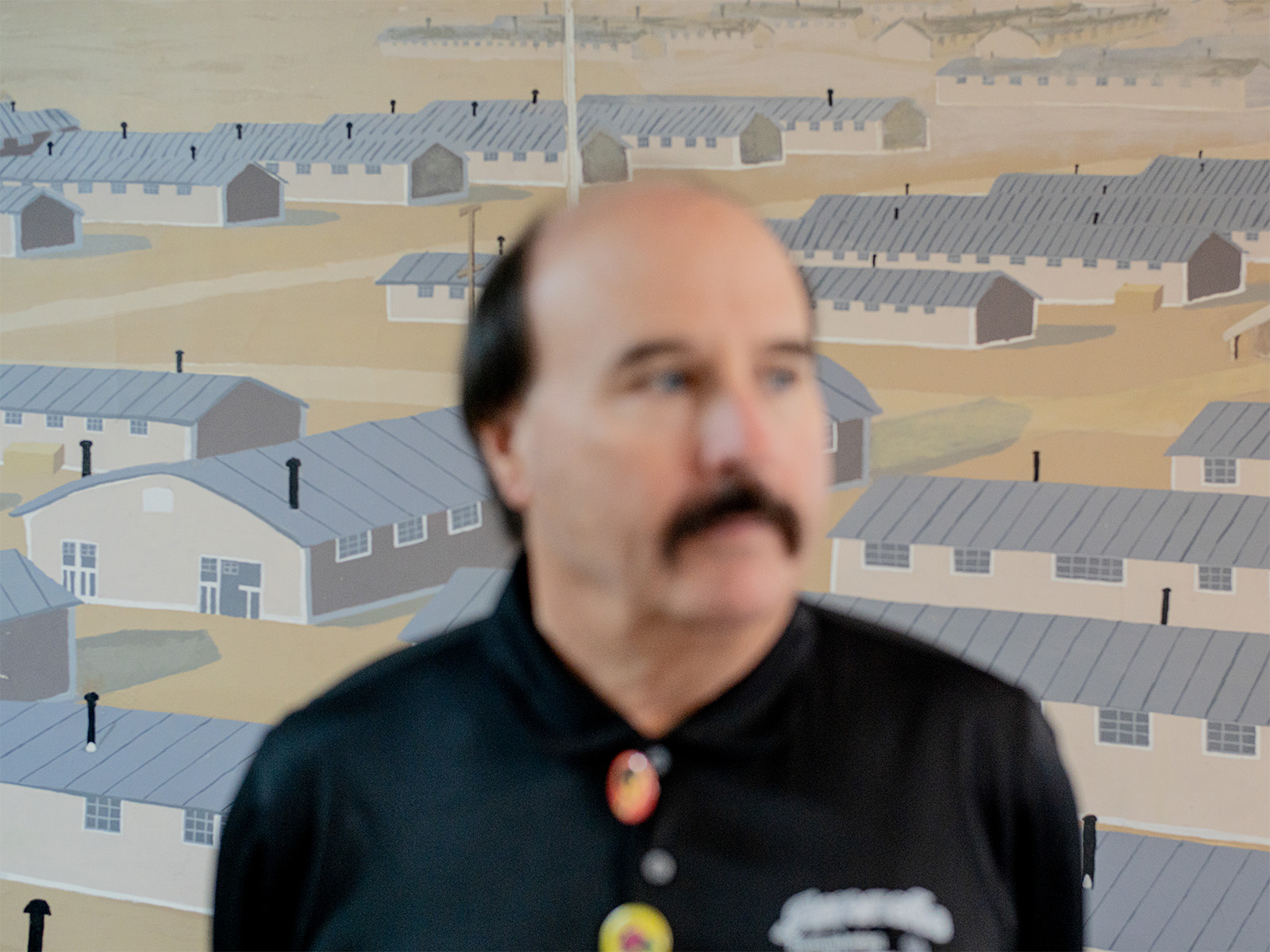
Hopper recounts all this with the rote meter of a man who has had to tell the same story many times over. A year into the job at Granada High School, he worried that he was boring his students by teaching textbook history and saw an opportunity in the remarkable piece of history in the town’s backyard. He had students build a scale model of Amache and interview Namura, who connected them to other Amache survivors. In 1993, Hopper and his students formally organized the Amache Preservation Society, recording oral histories, giving public talks about Amache, and tending to the site. Camp artifacts—scrapbooks, stuffed animals, a wedding dress—started pouring in from survivors who could finally trust that someone in Granada was ready to hold their history. So many items arrived that the group eventually started a small museum in Granada that remains open to this day and is staffed by Granada High School students.
Attitudes about Japanese American incarceration had begun to shift on the national level following the Civil Liberties Act of 1988, which granted $20,000 and a presidential apology to every citizen and legal resident incarcerated in the camps. The legislation, signed by President Ronald Reagan, admitted that the detention of Japanese Americans was not an act of military necessity but instead a result of “racial prejudice, wartime hysteria, and a lack of political leadership.” And in Granada, two major obstacles were out of the picture: McMillan had retired as mayor and gone back to working full time as the town barber, and Schibbelhut had lost standing when, in 1992, she was convicted of embezzling more than $83,000 from the municipality.
Still, Hopper’s work drew the ire of the town’s old guard. “My name was mud in this community,” he told me. People accosted him on the streets and sent him hate mail, demanding that he stop teaching Amache history. Hopper was undeterred. After he realized that arguing wasn’t making a difference, he learned to hear people out and then respond, “So you’ve said your piece. Bye. Have a nice day. I’ll have a beer with you later.”
For Amache survivors, Hopper and his students were the local advocates they had been waiting for. In June 1998, the Amache Historical Society and the Denver Central Optimists organized a reunion in Colorado Springs and the largest pilgrimage yet to the site. Close to 500 survivors and their families participated, and this time Granada welcomed them. In a letter to Shigekuni, new Mayor Thomas Grasmick, whose eldest son had been an early Amache Preservation Society student, extended a welcome and offered “any assistance to make your visit to Amache and the Town of Granada memorable.”
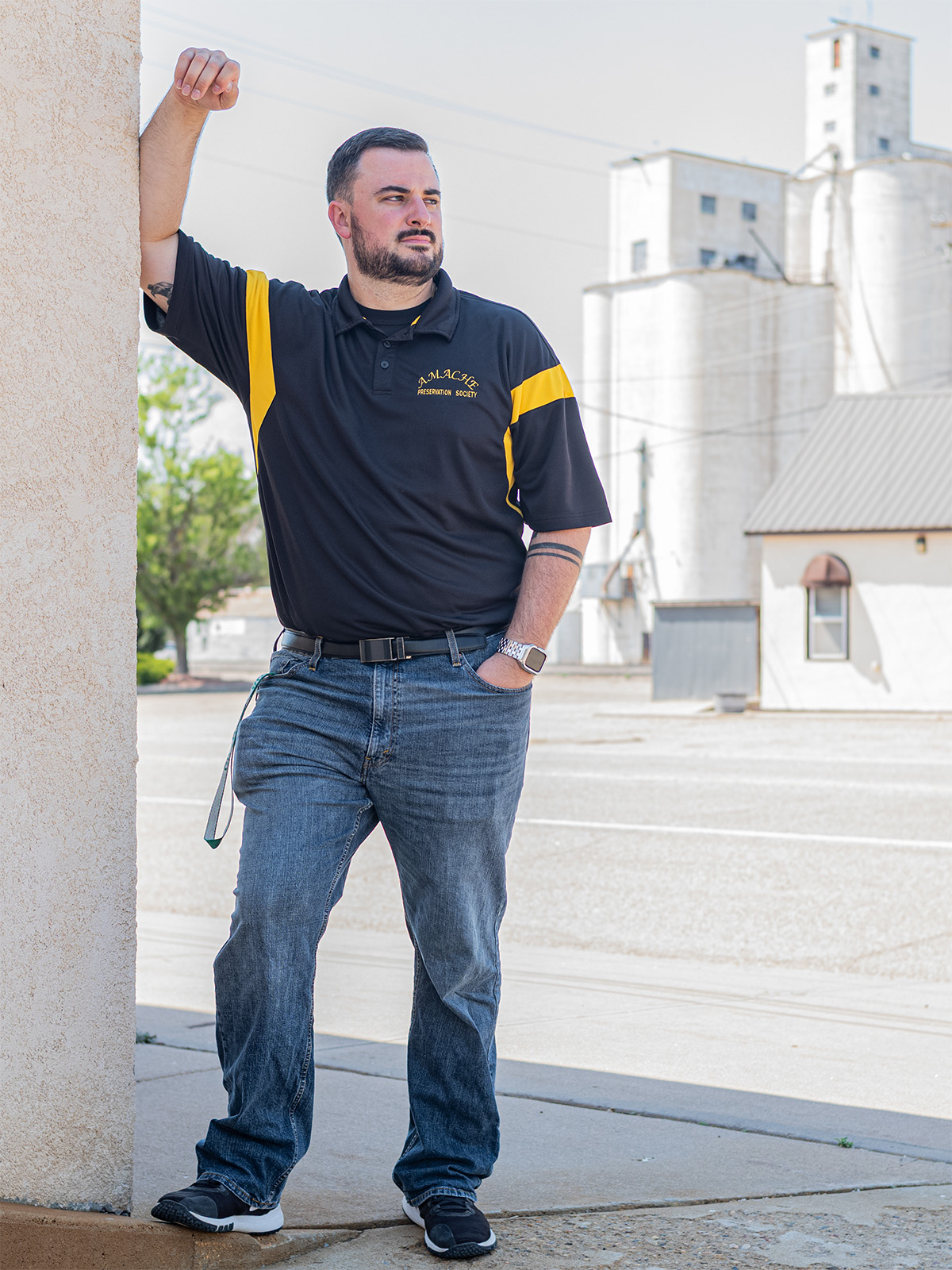
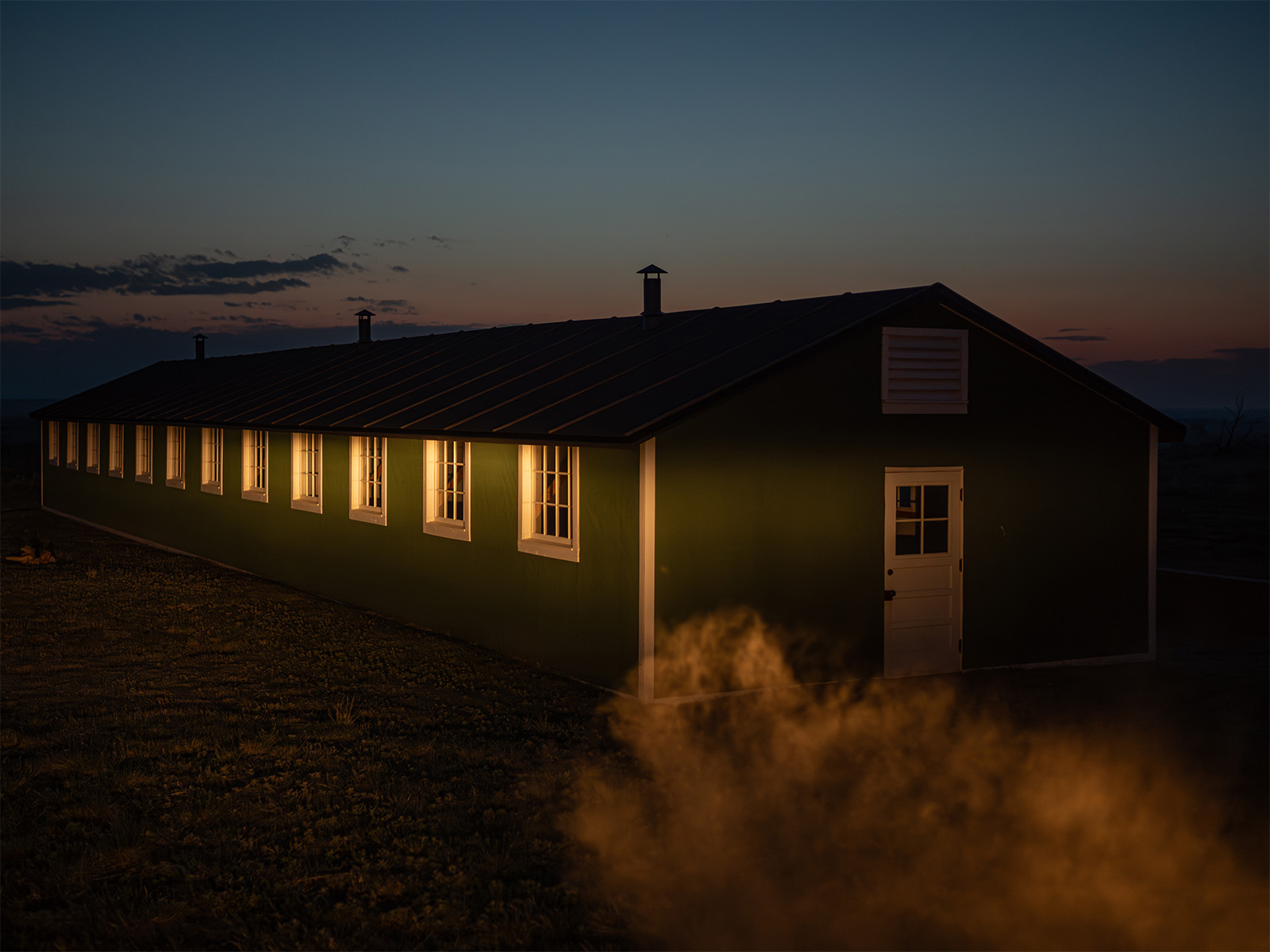
Thomas Shigekuni passed away seven years ago at the age of 90, but his daughter, Vicki Shigekuni Wong, visited Amache for the first time during a May 2023 pilgrimage. She gave the elegant affect of Old Hollywood in an oversize black woven visor and darkly tinted shades. For so long, her father’s dedication to preserving the site seemed to her like an unhealthy fixation. “He was crazy about Amache,” Shigekuni Wong told me. “That was his number one topic.” His obsession made sense to her after she experienced the place herself. At the threshold of a model barrack that now sits on the site, she felt a rush of emotion. “I mean, I almost didn’t want to go in. But when I went in, I was shocked…. I was outraged.”
Later that day, Shigekuni Wong listened closely as Mitch Homma, the grandson of the famous dentist who had died at Amache, addressed a small crowd of pilgrimage attendees. He stood on the foundation of the barrack where his father’s family lived during the war. The wind whipped flurries of dust up from the ground, and wildfire smoke that had drifted unfathomably far south from Canada stretched across the sky like a curtain drawn too tightly from one horizon to the other. As he spoke, Homma grasped a family portrait taken at that exact spot in 1944. His eyes were wet from dust or tears, and his voice frequently pitched higher with emotion. He recalled his first visit to Amache in 2008. He had convinced his father to come back for the first time too. “When we got off the bus…I saw the look on Dad’s face. And I thought I was the worst son in the whole world. You could just see all the memories. Whenever Dad talked about Amache…he would always say, ‘Amache took my father away.’ ”
Though his first trip to Amache was a challenging one for Homma, it inspired him to get involved in helping to preserve the site. He joined what’s now called the Amache Alliance, a California-based organization for descendants of the camp, and serves as the president of its board of directors. Years of grassroots advocacy and relationship-building had won the site National Historic Landmark status in 2006; six years later, Granada signed a 99-year preservation easement to protect the property. In 2019, Tracy Coppola of the National Parks Conservation Association, a nonprofit advocacy group, suggested to Homma that the time was right to go for National Historic Site status, the highest level of federal protection.
From there, Homma says, things “kind of just snowballed.” With a groundswell of support from Amache survivors and descendants, Granada locals, the Amache Preservation Society, and Coppola, Colorado senators Michael Bennet and John Hickenlooper co-sponsored the Amache National Historic Site Act, which President Joe Biden signed into law on March 18, 2022. Even though Shigekuni wasn’t alive to witness the moment, his daughter thanked the president on his behalf: “He pledged to make certain that this dark period in history would not be forgotten. He always warned that ‘It could happen again.’ ”
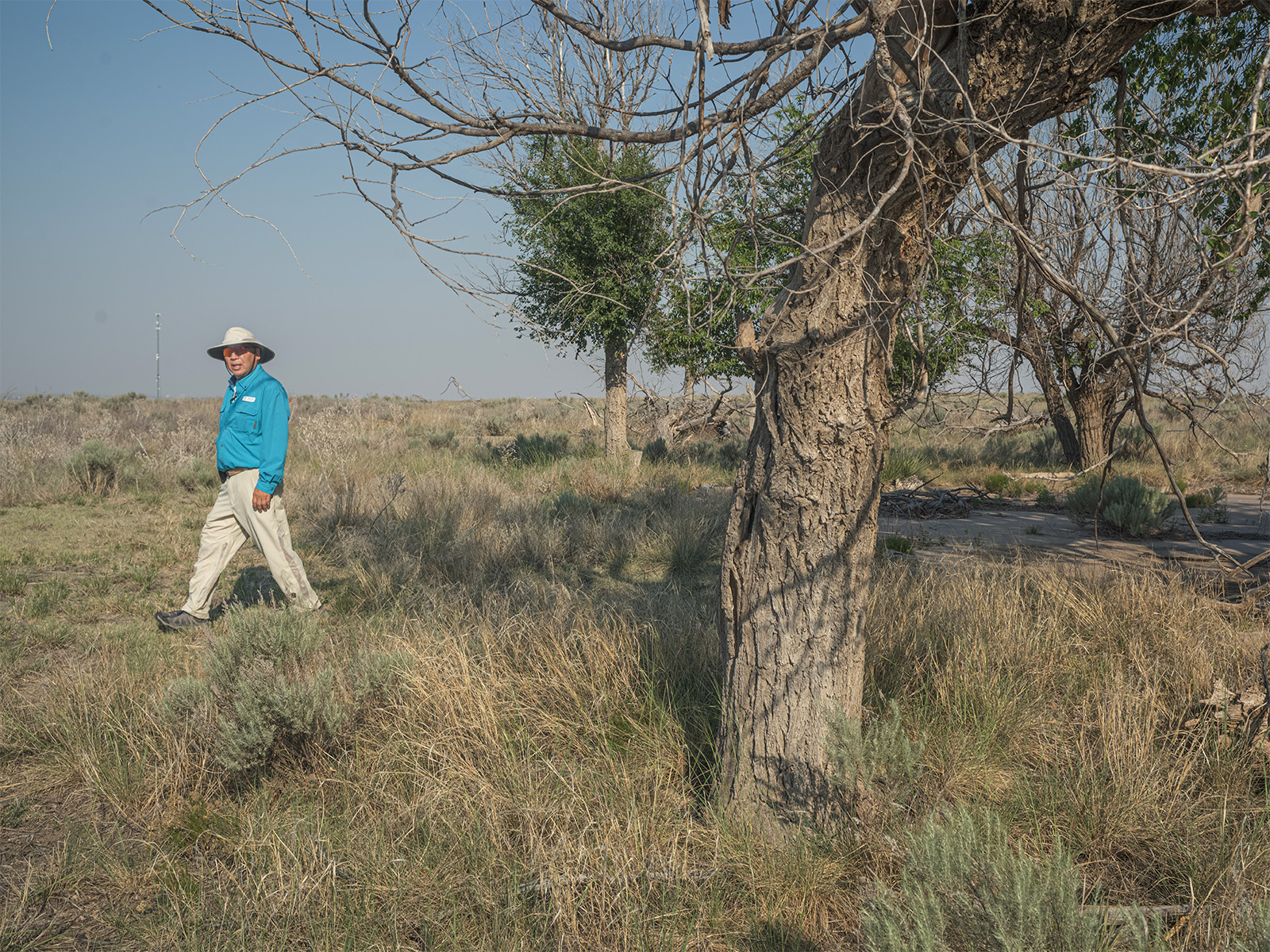
Where the prison city of Amache once stood, a partial blueprint remains. Native bunchgrasses thrive in water that pools in the cracked concrete foundations of barracks. The original roadways still form a neat grid of loose white dirt that plumes behind cars as they nose their way across the site’s single square mile. The Siberian elms incarcerees planted are nearing the ends of their lives now, and fallen limbs prostrate themselves dramatically atop the ruins.
When I first spoke to Eric Leonard in September 2023, he was just four months into his position as the superintendent of the High Plains Group of national park units, which in Colorado includes Bent’s Old Fort, the Sand Creek Massacre site, and, now, Amache. Leonard was optimistic about its potential impact. To him, national parks, and especially the ones that preserve the darker chapters of our collective history, are “America’s greatest classroom.” “These places are not good or bad,” he says. “They’re American places. It’s not our job to give people answers. It’s our job to give them enough information that they can start to think about it on their own, because that’s what a free society is.”
By the following summer, the National Park Service had a growing presence at Amache. Uniformed rangers greeted visitors who had come out to see a University of Denver Amache Community Archaeology Project dig. Bruce Smith, a member of the Kansas chapter of the patriotism-promoting Sons of the American Revolution, had driven seven and a half hours to see the new National Historic Site. He was most taken with the gardens the incarcerees built and how they “didn’t complain” about what happened to them. He admitted he had more to learn.
Victoria Matsuko Wigal was there too. Then a willowy college student from upstate New York (she graduated this past spring), she was serving her second stint as a volunteer with the DU archaeology program. Her friends back home didn’t understand why she liked to spend summers in the heat and dust of the place where her grandfather, great aunt, great uncle, and great grandparents had been incarcerated during WWII. “For me, personally, it’s really healing to be out here,” she said. As we stood on a barrack foundation, she gazed out at a rolling carpet of sand sage and shortgrass that bent toward the earth with each gust of wind. “It’s beautiful…the landscape, and also being able to connect with people who care so much about this and preserving the history and not letting it be forgotten,” Matsuko Wigal said.
But just a year after achieving status as a National Historic Site, Amache and its advocates faced another chapter in their decades-long battle over revisionist history. In March 2025, President Donald Trump’s Executive Order 14253, “Restoring Truth and Sanity to American History,” channeled the rhetoric of the Lillian Baker era, declaring, “It is the policy of my Administration to restore Federal sites dedicated to history, including parks and museums, to solemn and uplifting public monuments that remind Americans of our extraordinary heritage, consistent progress toward becoming a more perfect Union, and unmatched record of advancing liberty, prosperity, and human flourishing.” That May, the Secretary of the Interior outlined the steps managers of public lands, including all national parks, had to take in accordance with the order. This included identifying any language that “inappropriately disparage[s] Americans past or living” and replacing it with “content that focuses on the greatness of the achievements and progress of the American people.” The public has been conscripted to participate in the government’s surveillance through the use of QR codes installed at the sites to report “any signs or other information that are negative about either past or living Americans.”
Shortly after the QR codes were posted at the entrance to Amache, an anonymous visitor taped a satirical response next to them. Mimicking the kind of history the Trump administration seemed to be looking for, the note read: “It was the Spring of 1942 and President Roosevelt decided to treat people of Japanese descent [to] a fabulous free vacation at one of ten fantastic luxury resorts built just for the occasion.” It went on, twisting the wartime incarceration story into a sugarcoated dreamscape before concluding, “it was most certainly a once in a lifetime experience none would ever forget.”
For now, none of the actual interpretative signage at Amache has been changed. Its materials passed the Department of the Interior’s review because the law that created the Amache National Historic Site explicitly names its purpose as being to preserve, protect, and interpret its history as it relates to the “incarceration of civilians of Japanese ancestry during World War II.” Secretarial and executive orders do not supersede law, so park service staff is legally obliged to tell the story of the mass civilian incarceration that happened at Amache—a narrative that doesn’t easily lend itself to celebrating the advancement of “liberty, prosperity, and human flourishing.”
Still, as the park service and its partners head into the multiyear process of developing the management plan for Amache, many worry about funding cuts and the current administration’s pattern of acting extrajudicially. But survivors and descendants have inherited a playbook for challenges like this, and they plan to keep doing what they have done for the past 81 years. Speaking from his home in Littleton, Amache Alliance board member Derek Okubo underscored the fact that like his late father, Henry, and Thomas Shigekuni, he just wants the right to speak truthfully about what happened. “We’re going forward no matter what,” Okubo said. Then, his voice catching: “That was my dad speaking.”