

The Local newsletter is your free, daily guide to life in Colorado. For locals, by locals.
Last month, Daniel Blumstein was feeling desperate. Like scientists nationwide, the UCLA ecologist, who spends his summers studying marmots in Crested Butte, was reeling from the Trump administration’s massive cuts to federal research funding.
Much of Blumstein’s work, and that of his colleagues at the Rocky Mountain Biological Laboratory, is made possible by the National Science Foundation (NSF), whose grantmaking has slowed to a crawl. For the 2027 fiscal year, Trump is trying to slash the NSF’s budget by more than 40 percent, following similarly sweeping reductions in 2026 and 2025.
This could be the end of the marmot study, which has been running continuously for 65 years—a rarity in the scientific world. Blumstein inherited the project, which focuses on changes to the marmot population over time, from Ken Armitage, who launched it in 1962. It’s now one of the longest-running wildlife research studies in the West and could yield valuable insights on aging, resilience, and climate change (especially because marmots are an indicator species whose health can signal broader systemic threats). Now the future of this work is in jeopardy. What’s a biologist to do?
Blumstein’s brain went to a weird place: OnlyFans, the subscription content site best known for its pornography. “My wife and I had recently watched Margo’s Got Money Troubles,” he says, an Apple TV series in which the protagonist starts an OnlyFans account to support herself. He then floated the idea to his students (aka Team Marmot) in the lab: “Marmots have got money troubles too. What if we started an OnlyFans?” Reception was initially mixed (“Ugh,” one student replied), but after grad student Emily Renkey suggested the catchy name “OnlyMarms,” Team Marmot agreed to give it a go.
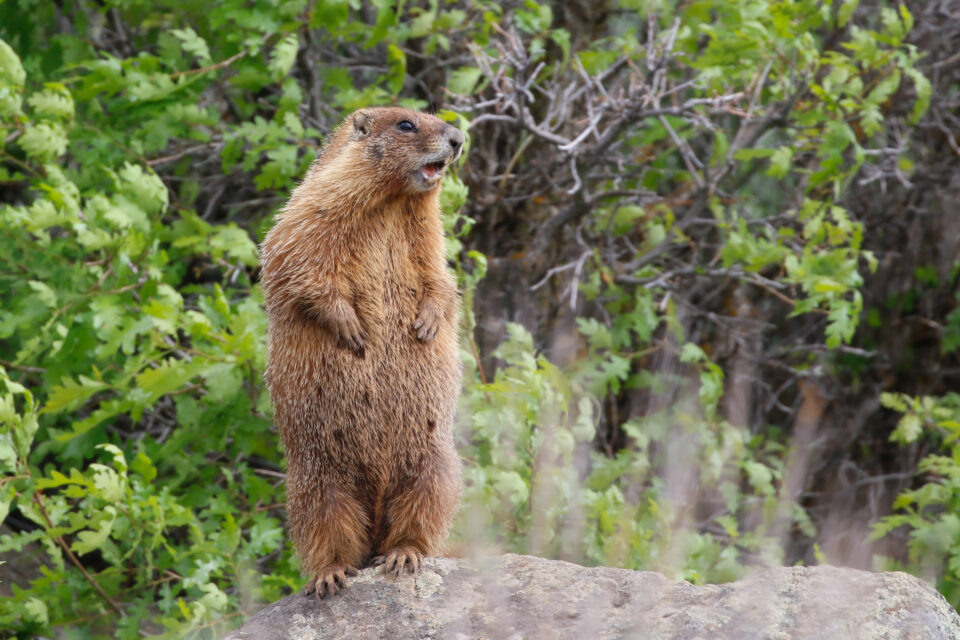
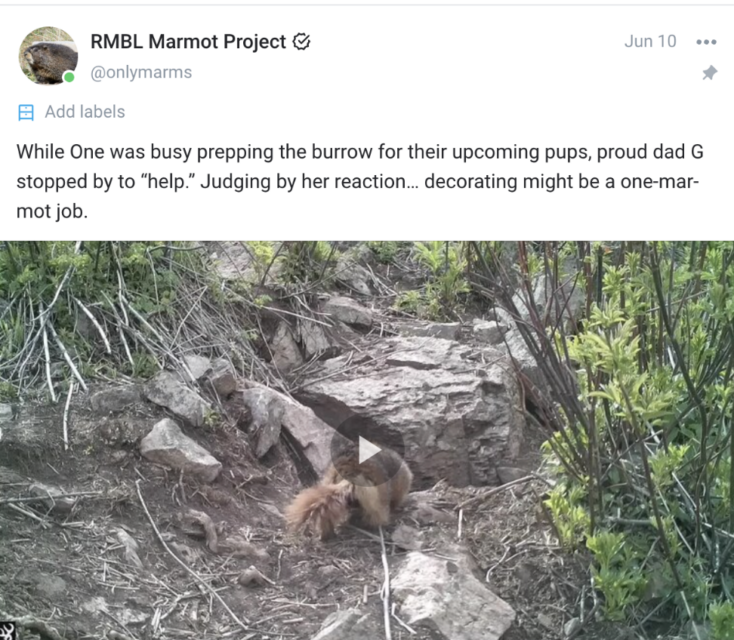
Since launching last month, the page has raised roughly $3,000 in donations from devotees of its “unfiltered yellow-bellied marmot content from the Rockies.” The posts, of course, are G-rated, humorous, and educational. Followers can watch footage of a marmot crawling into a car—the chubby critters have a thirst for radiator fluid, which tastes pleasantly sweet to them, and the nooks and crannies inside a vehicle are similar to their burrows. There’s a clip of a mama marmot shooing away her mate when he tries to help furnish their burrow with grass (“Judging by her reaction, decorating might be a one-marmot job,” the post reads). And there are cute photos of Jamba Juice, “a very healthy yearling female in town. Now this is a Marmot I’d Like to Fund!”
To keep their work going, Team Marmot is experimenting with other quirky fundraising projects in addition to OnlyMarms. They’ve launched Fat Marmot Week (August 24 to 29), modeled after the success of Fat Bear Week, during which viewers vote for their favorite chubby mammals as they bulk up for winter. Marmot enthusiasts are encouraged to donate online when they vote. You can also support the sleepy ground squirrels by buying a pint of Marmot Tears, a beer released in partnership with Crested Butte’s Irwin Brewing Co. “People are being very generous, and that’s heartening,” Blumstein says. “But what we really need is sustained federal support.”
3 Reasons to Fund Colorado Marmot Research
It’s all in good fun—but there is serious science behind the silly campaign. We asked Blumstein why it’s important to keep funding marmot research.
1. Marmots could reveal secrets to longevity.
These squirrel-like critters spend more than half of their lives asleep, huddled together in cozy communal burrows they dig up to 20 feet underground and insulate with hay. They hibernate for seven to eight months of the year, and while they snooze, their bodies are frozen in time. The research team found that DNA methylation, a process strongly correlated with aging, stalls during marmot hibernation. If the scientists can track what’s happening on a molecular level, perhaps their findings could one day help humans live longer. “Marmots can live up to 16 years,” Blumstein says, “and they can help us understand aging.”
2. A 65-year study yields a treasure trove of data that’s useful beyond just marmots.
“Most studies can’t track how a population changes over decades,” Blumstein says. He and his team have reams of data showing dips and baby booms in Crested Butte’s marmot colonies. Last winter, with less snowfall to insulate their burrows and keep them warm in hibernation, the marmots suffered, with only 60 of 160 individuals surviving. Now they’re bouncing back. “If you want to learn about resilience, this is how you do it,” he says. “We really need these long-term studies.”
3. The study has trained two generations of scientists and counting.
A colorful banner featuring dozens of flags from around the world—Mexico, Iran, China—hangs in Blumstein’s Colorado office. These are just a few of the home countries of undergraduate and graduate students who’ve conducted fieldwork at the Rocky Mountain Biological Laboratory. “America has educated the world, and we’ve become rich because of that,” Blumstein says. “Scientific research is part of what makes us great, and we are at risk of losing that. We’re admitting fewer graduate students now.”
Trump’s immigration crackdown is also creating barriers: Blumstein works with a Canadian student who was given a shorter visa than usual, forcing him to return home before his research was finished. Despite these barriers, the Colorado lab continues to host outreach programs and summer camps to inspire burgeoning biologists.