
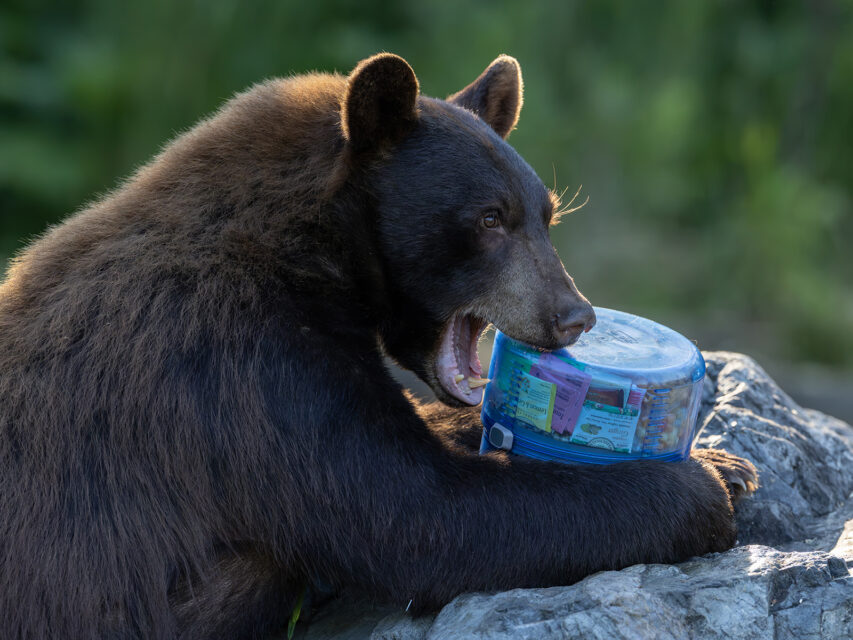
The Local newsletter is your free, daily guide to life in Colorado. For locals, by locals.
Any backpacker knows that bear canisters are a necessary evil. Wedging the food storage container among all your other overnight necessities—sleep system, extra layers, bathroom kit to doo your duty—complicates the packing process considerably. And carrying a 10-liter, plastic barrel while tramping miles in the mountains feels like an uncalled-for CrossFit workout. On the other hand, feeding the wildlife (even accidentally) may lead to death, most likely for the bear that learns to associate humans with food and needs to be euthanized.
BearVault has been wrestling with this bear-safety-vs.-human-convenience dilemma since the company was founded in 2004. This year, the Louisville-based brand introduced a product that takes major steps to solve it: the first-ever collapsible bear canister. “We wanted to protect wildlife first and foremost,” says Grant Breidenbach, BearVault’s manager of marketing and sales, “but we also wanted to make the user experience on the trail as good as it can possibly be.”
The design brief for the new BV One bear canister was straightforward: Make it lighter than other models, less bulky, and easier for the intended (i.e. human) user to open, even with cold fingers. Oh, and it also needed to defy the 42 teeth and five-inch claws of a grizzly bear, along with the roughly 3,000 pounds of force the keystone predator can exert when it wants something (like a can full of food).
Thousands of computer models, hundreds of 3D-printed iterations, and dozens of field-tested prototypes later, the BV One landed on shelves this April. It features new-to-market, soft-touch buttons that require a simple push-and-twist motion to open. The 8.3-liter vessel is designed to carry enough food for two people for two nights, the most common backcountry camping scenario according to BearVault internal data and Outdoor Industry Association participation trends.
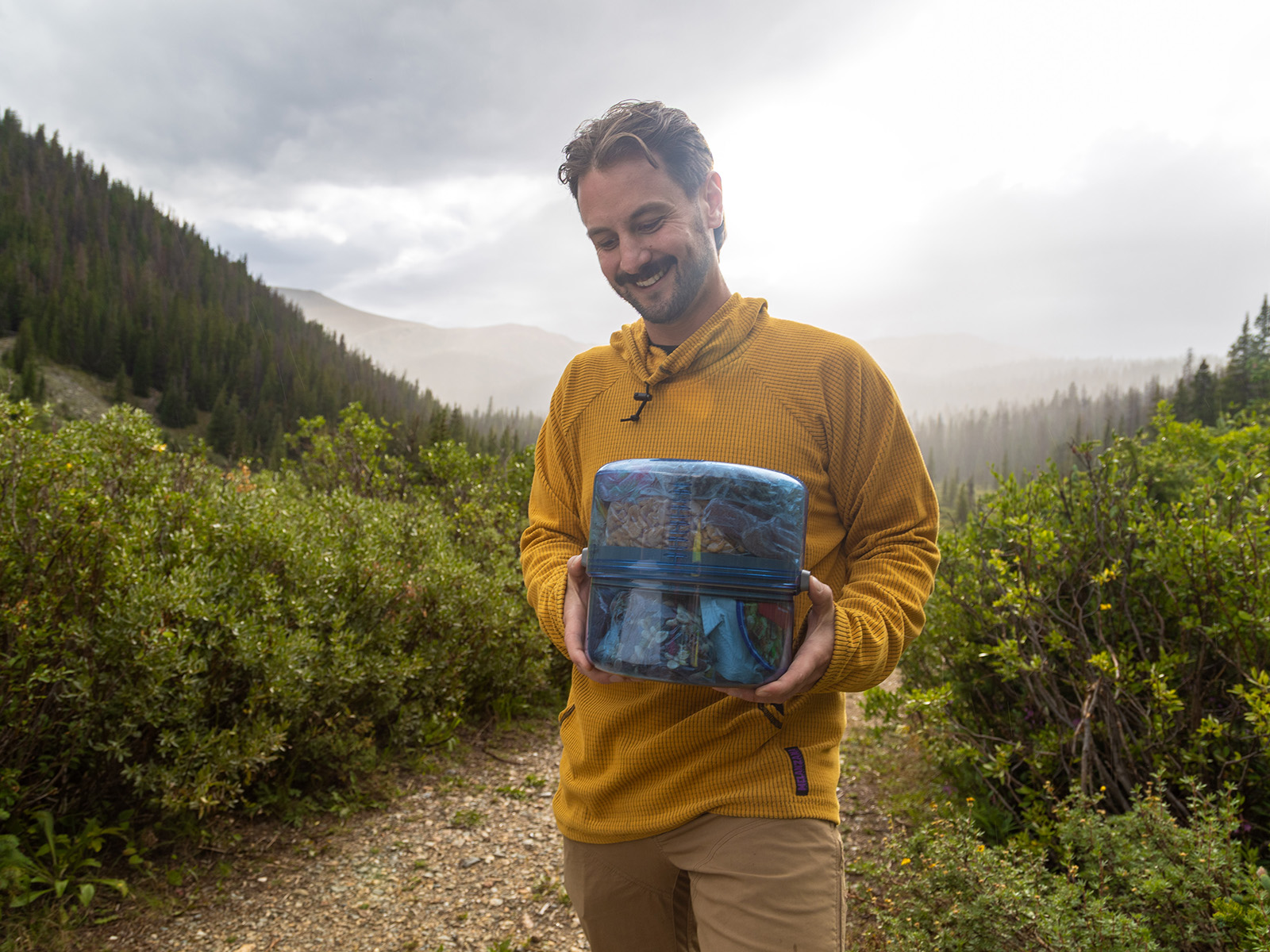
Most impressive though is the telescoping design—which is slightly different from REI’s modular model with its removable middle section—that allows the user to screw the top half of the canister down incrementally as their food supply diminishes until the container’s bulk is reduced by nearly half. “An adjustable design seemed both obvious and impossible,” says BV One product developer Mitch Frechette. The challenge came in achieving adaptable volume without compromising on strength and durability. “It required a return to engineering fundamentals.”
Earning the distinguished “bear-proof” label necessitated demonstrating the drum could withstand the wiles of “professional” gear analysts at the Interagency Grizzly Bear Committee. In other words, the BV One had to endure a lashing from grizzly bears at the committee’s testing facilities for more than an hour. “These bears are way better at getting into things than a wild bear would be,” Breidenbach says, adding that if a bear stops toying with the prototype, the clock stops, and eventually, another bear will be brought in to continue the test. “You’ve got 10 different bears that have been doing this for years on trash cans, coolers, lockers, and canisters. They are excellent at pointing out our weaknesses and our flaws.”
Given that weighty hurdle to innovation, bear canister design hasn’t seen significant transformation since the first model, the opaque Garcia Backpackers Cache that came to market in 1982. BearVault introduced a transparent version with a tool-free opening (the now-discontinued BV100) to great acclaim in 2004 and has continued to expand the line with different sizes in the time following.
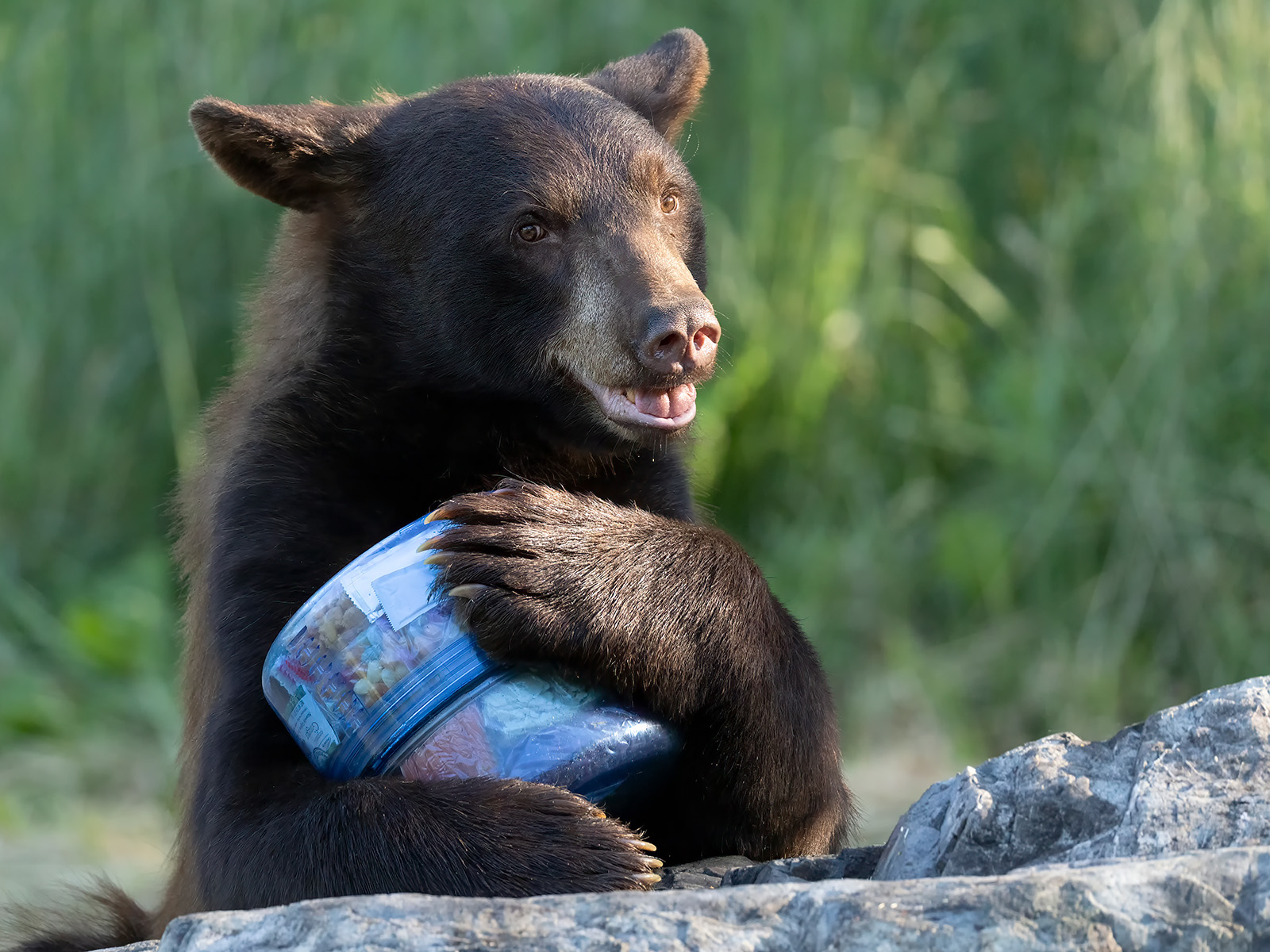
Still, the basic top-loading, cylinder-shaped paradigm remained. That’s because while it’s cumbersome, it’s also highly effective. Basic engineering principles, namely the fact that the cylinder shape can withstand considerable force and effectively distribute it, prove this conceptually. Bear canisters’ effectiveness was demonstrated IRL after a 2015 mandate requiring them for overnighters to the Maroon Bells-Snowmass Wilderness that led to a 98 percent reduction in the rate of human-bear conflict, according to a presentation at the 2022 International Human-Bear Conflicts Workshop. “Thanks to bear canisters, not only do you have bears that are returning to their natural food sources and are not being euthanized,” Breidenbach says, “but also you have people who are going into the woods without fear.”
With the introduction of the more manageable BV One, the BearVault team hopes more backpackers will choose to bring along a bear canister voluntarily, even when overnighting in regions where one isn’t required. Doing so not only protects the hiker from a dangerous run-in, it also prevents bears—and mice, marmots, and other notorious scavengers—from developing a devastating taste for human food. “It isn’t just your trip you’re protecting,” Breidenbach says. “You’re also protecting the adventures of everyone else who comes and recreates in this place after you. It’s part of that Leave No Trace ethic, and we believe that BearVault’s right at the heart of that.”