
The Local newsletter is your free, daily guide to life in Colorado. For locals, by locals.
- Where:
- Stanley Marketplace, 2501 Dallas St., Aurora
- The Draw:
- Casual and artfully conceived Mexican food that draws inspiration from around the world
- The Drawback:
- Folding chairs can be uncomfortable during a long meal
- Noise Level:
- Loud, thanks to all the hard surfaces
- What To Order:
- Aguachile verde, ceviche, flautas, tetela, cebollitas y chiles, frijoles, lengua taco, carnitas, milk punch
- Price Per Person:
- $35–$40 (before drinks)
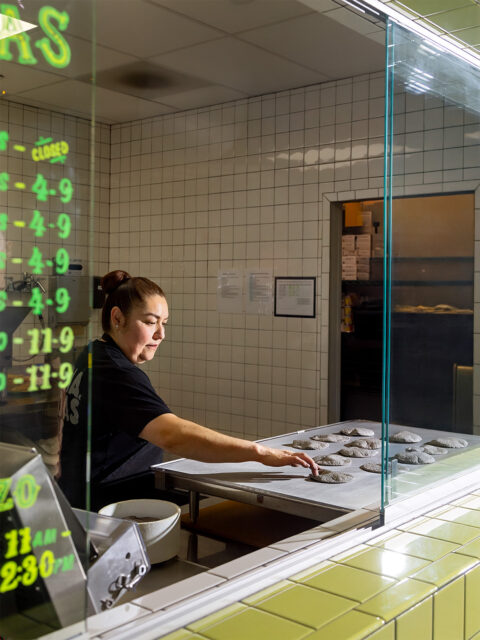
At nine-month-old Molino Chido, tacos are an art form, and the canvas is masa de maíz, which you can see being made through the window into the front room of the kitchen. There, two talented women, Dani Ramírez and Diana Rentería, grind soaked corn kernels in an electric molino (or mill) and then roll the resulting dough into stacks of plush, chewy tortillas.
Still, the six tacos are listed last on the menu, intentionally showcasing the crudos, antojitos, and large plates first. “We don’t want to be just known for tacos,” Michael Diaz De Leon says. “Tacos should be like your dessert.”

Diaz De Leon earned a Michelin star for excellence and a Green Star while leading the kitchen at Brutø from 2020 to early 2024 before opening Molino Chido with Tommy Lee, a 2026 semifinalist for the James Beard Foundation’s Outstanding Restaurateur award and the chef-restaurateur behind Uncle and Hop Alley.
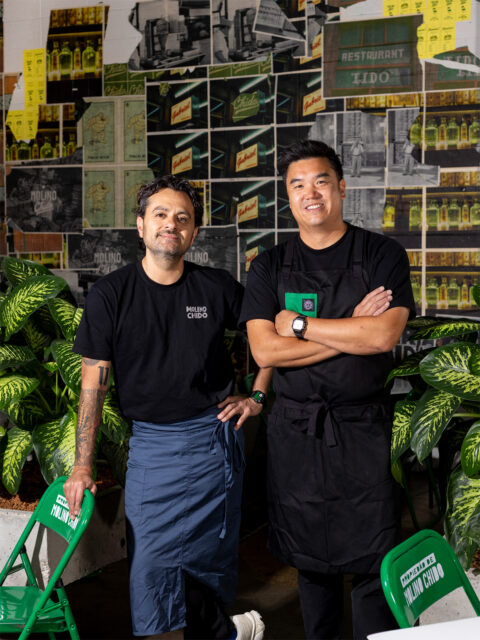
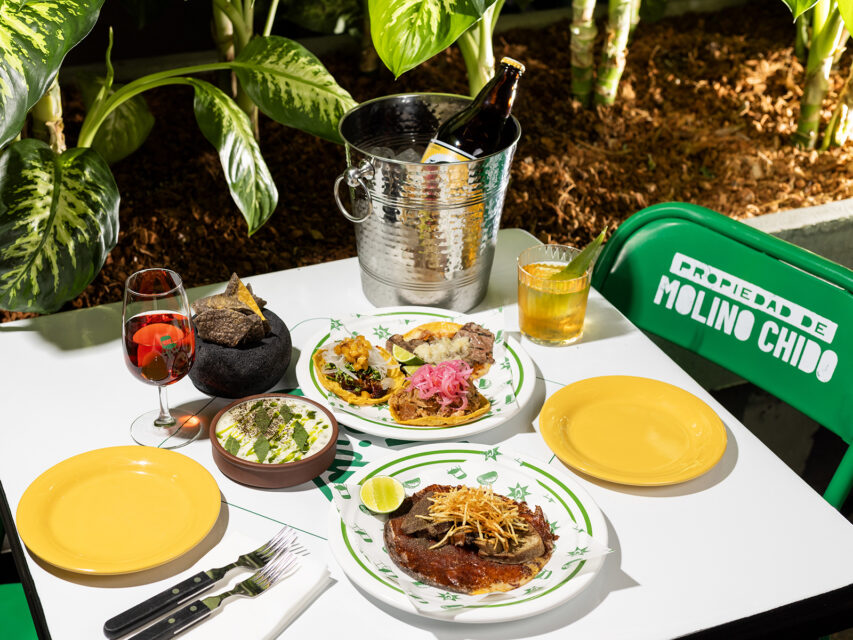
Situated in a back corner of Aurora’s Stanley Marketplace, Molino Chido (chido means “cool” or “awesome”) is fashioned after Mexico City’s taquerias. The space’s color palette—reminiscent of jalapeños and limes—screams fresh and fun. While not particularly comfortable, the green metal folding chairs and card tables create a vibe akin to that of CDMX’s myriad street stalls and open-air eateries. (If you don’t like the chairs, sit at a high-top or at the bar, where your first move should be to order the slightly tropical house milk punch made with Vago elote mezcal, a corn-based liqueur called Nixta, banana, and pecan.)
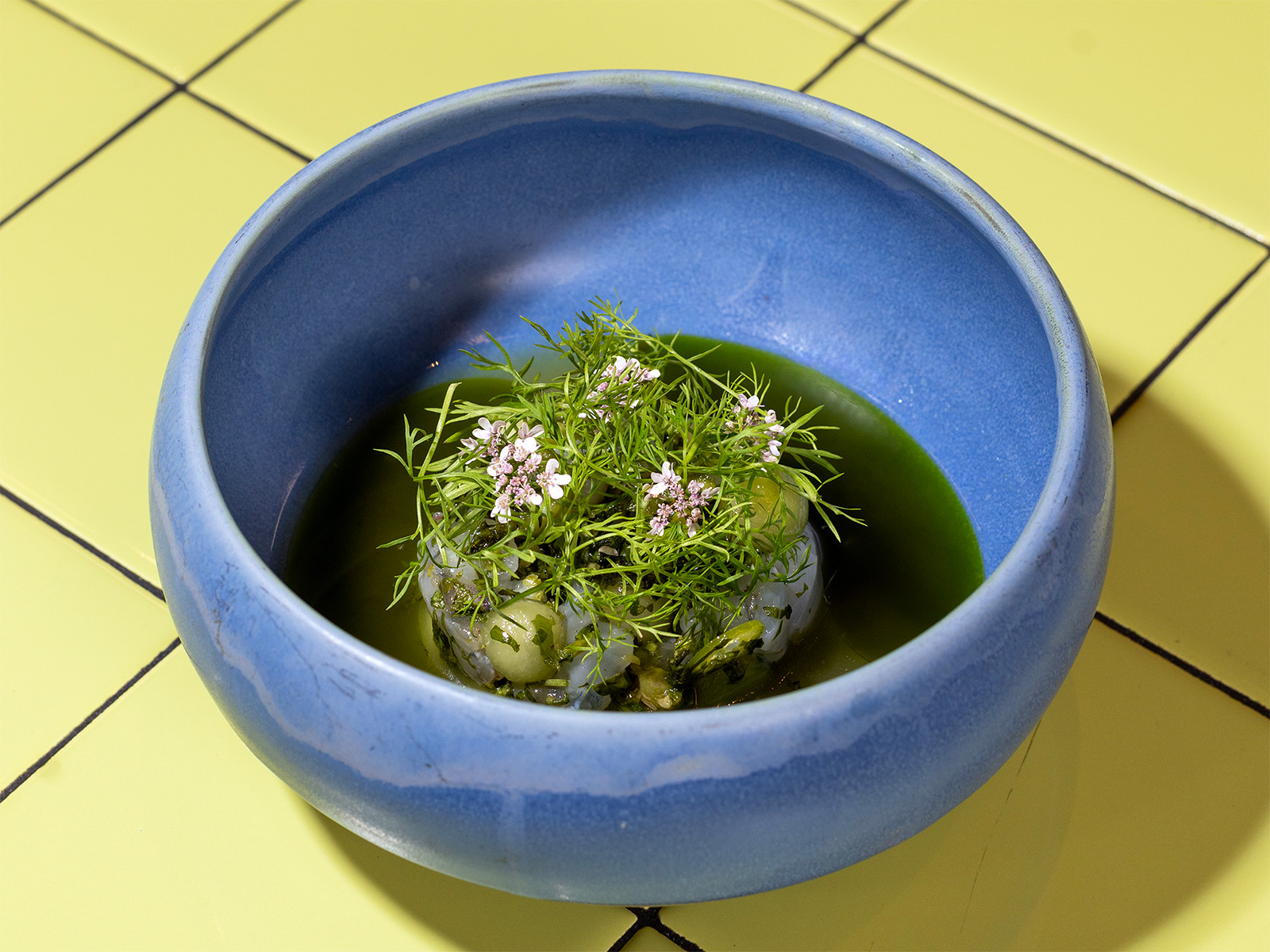
Honor the lauded chefs’ intentions by starting with a seafood crudo. The aguachile verde with cured scallops, honeydew, cucumber, and serrano, all in a want-to-gulp-it-like-Gatorade marinade, pairs delightfully with the exquisitely crisp and slightly savory Masumi sparkling sake (yes, in a taqueria!). Another favorite, the coconut-creamy ceviche, stars the catch of the day, leche de tigre, and apple pico de gallo. When I ordered it, the fish was sweet and tender kampachi with a garnish of hoja santa. Don’t push those leaves aside; nibble them right along with the fish for hints of root beer and mint.
The garnishes here—including that hoja santa, a bright cilantro-epazote oil, flowering coriander, juicy florets of ice (not iceberg) lettuce, and paper-thin slices of peppery radish—are a clue to the truth of this food and the duo behind it. Diaz De Leon, in the kitchen, and Lee, most often on the floor, are adding their imprint to an already deeply grounded and rich cuisine.
I would drive across town for their cebollitas y chiles: a tangle of melted cipollini onions and jalapeños quickly charred and served with a creamy green salsa. (Diaz De Leon says this side is getting a small upgrade and will soon include charred carrots.) In either case, ask for an order of tortillas for scooping. They’ll come in handy for the side of frijoles too. The Boulder County–grown beans are cooked down with miso and served with crumbles of Cotija cheese and a ladle of a robust, earthy sauce called chile colorado that Diaz De Leon replicated from his childhood in northern Mexico.
The tetela is a swoony little masa triangle that tastes like a corn-forward sopapilla and wraps saucy quesabirria cauliflower and golden xnipec (a snappy, pickle-y onion salsa that translates to “nose of the dog”) up like a gift. “You’re supposed to cry because it’s so spicy,” Diaz De Leon says, adding that Molino Chido has toned its down.
If you do like spice, you’ll love the trio of salsas served with the tacos. The habanero version is smoking hot but also inconceivably buttery. Diaz De Leon explains that he cooks down onions, habaneros, garlic, and carrots before deglazing them with white vinegar and Yondu, a Korean umami seasoning Lee introduced him to. The concoction is then blended with oil, making it creamy and fluffy.
Do as the chef does and put it on the bison tongue taco. Like all of the tacos, it can be ordered with a lacy cheese crust (con costra) for an extra $2, but doing so with the already rich lengua is gilding the lily. The carnitas taco, topped with more of that xnipec, also stands on its own without added cheese. However, I found the mushroom taco with mushroom mole and salsa macha too salty and somewhat one-note.
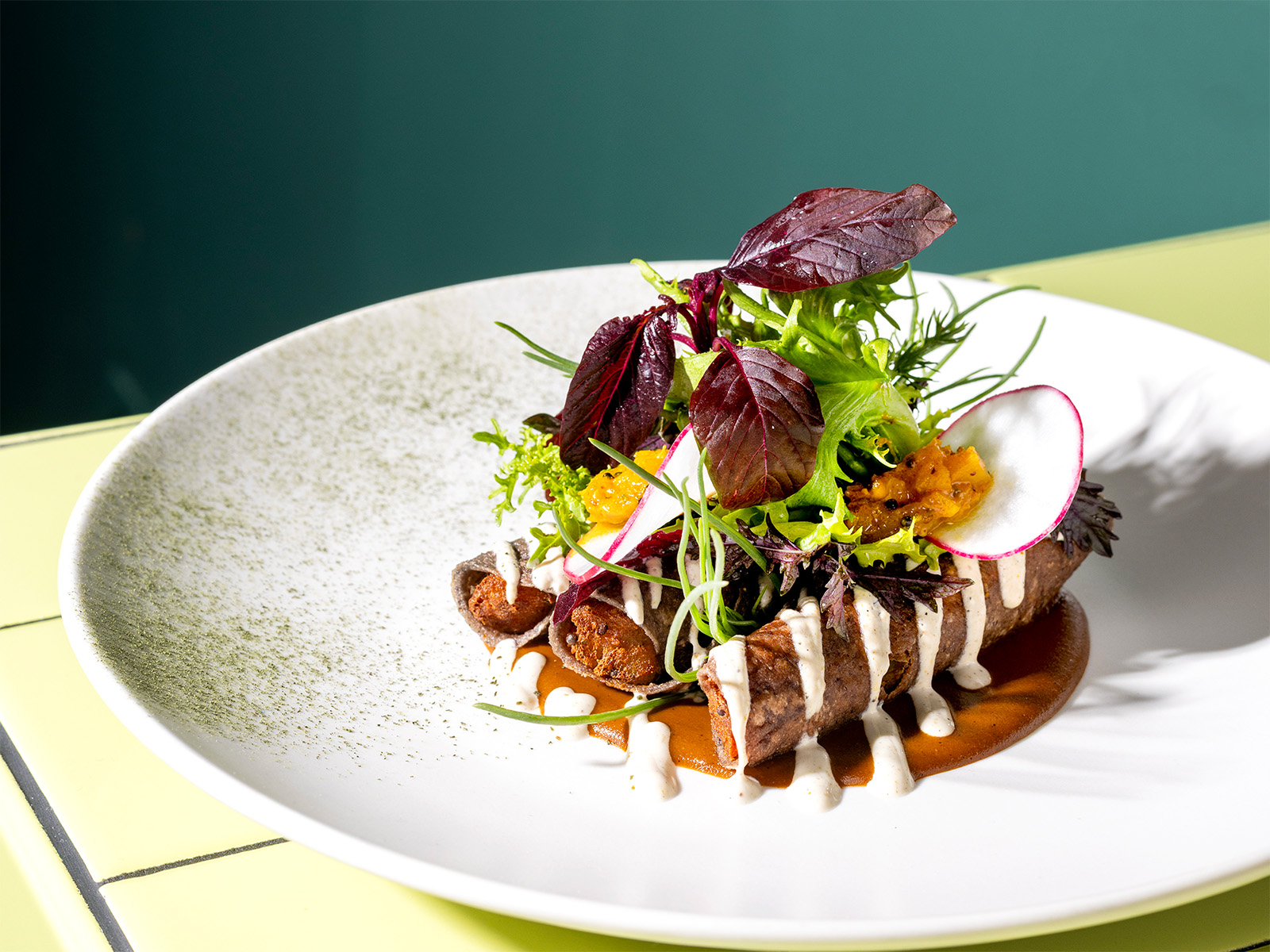
Look around and you’ll see the rolled, stuffed, and fried flautas on nearly every table. These are curiously filled with curried potatoes, topped with cucumber-yogurt raita, and plated over mole masala manteles (a clever culinary portmanteau of Indian spices and the classically fruity and spicy Oaxacan mole manchamanteles). Diaz De Leon pulled inspiration for the samosa-like flavors from a recent trip to Mumbai. “This dish truly represents who I am as a chef in this current era of my life,” he says. “It showcases the masa, working with local farms, my sauce work, my travels.”
Those Colorado producers—Bow & Arrow Brand from southwestern Colorado’s Ute Mountain Ute reservation, Boulder County’s Toohey & Sons Organic, Centennial Cuts in Fowler, and others—are championed on the menu and spoken about when dishes are described, but with a note of pride, not preach. “I have a responsibility to tell those stories,” Diaz De Leon says. “Just because we’re a taqueria doesn’t mean I can’t talk about the intentionality. Would it be more profitable if we got everything from Sysco? Yes. But then why would I be doing this in the first place?”
Thus, it’s not surprising that Molino Chido’s ethos is equally well represented by grabbing tacos at a folding table on a Tuesday and by Más Chido, a five-course tasting experience ($105) at a counter that looks into the kitchen. Available only on Friday and Saturday nights, the setup harks back to Diaz De Leon’s exploratory chef’s counter at Brutø.
Plus, it’s the only way to nab real dessert—like a decadent chocolate flan—at this convention-defying cantina.
Read More: Two Top Denver Chefs Team Up for Cool New Aurora Taqueria