
The Local newsletter is your free, daily guide to life in Colorado. For locals, by locals.
On a Wednesday morning this past May, Taylor Calmus sits at the head of a wooden table in his lofted office space in Fort Collins, casually signing a stack of books. The title, A Daily Dose of Dad Jokes, tells you most of what you need to know about the guy holding the pen.
But in case you want to probe a little deeper, the whiteboard behind Taylor offers a window into the mind of one of Colorado’s best-known digital creators. Tentative concepts for Dude Dad, his sketch comedy brand that boasts more than 10 million followers across its social media channels, are scrawled in marker. “Your Friend Just Bought a House.” “Laundry on the Bed.” “Typical Colorado Day.” Another, “Four Under Ten,” makes clear reference to Taylor’s own brood. There’s also a list of “builds” on the board, ideas for set pieces that range in scope and imagination. “Ramps.” “Duck pond.” “Jet ski.”

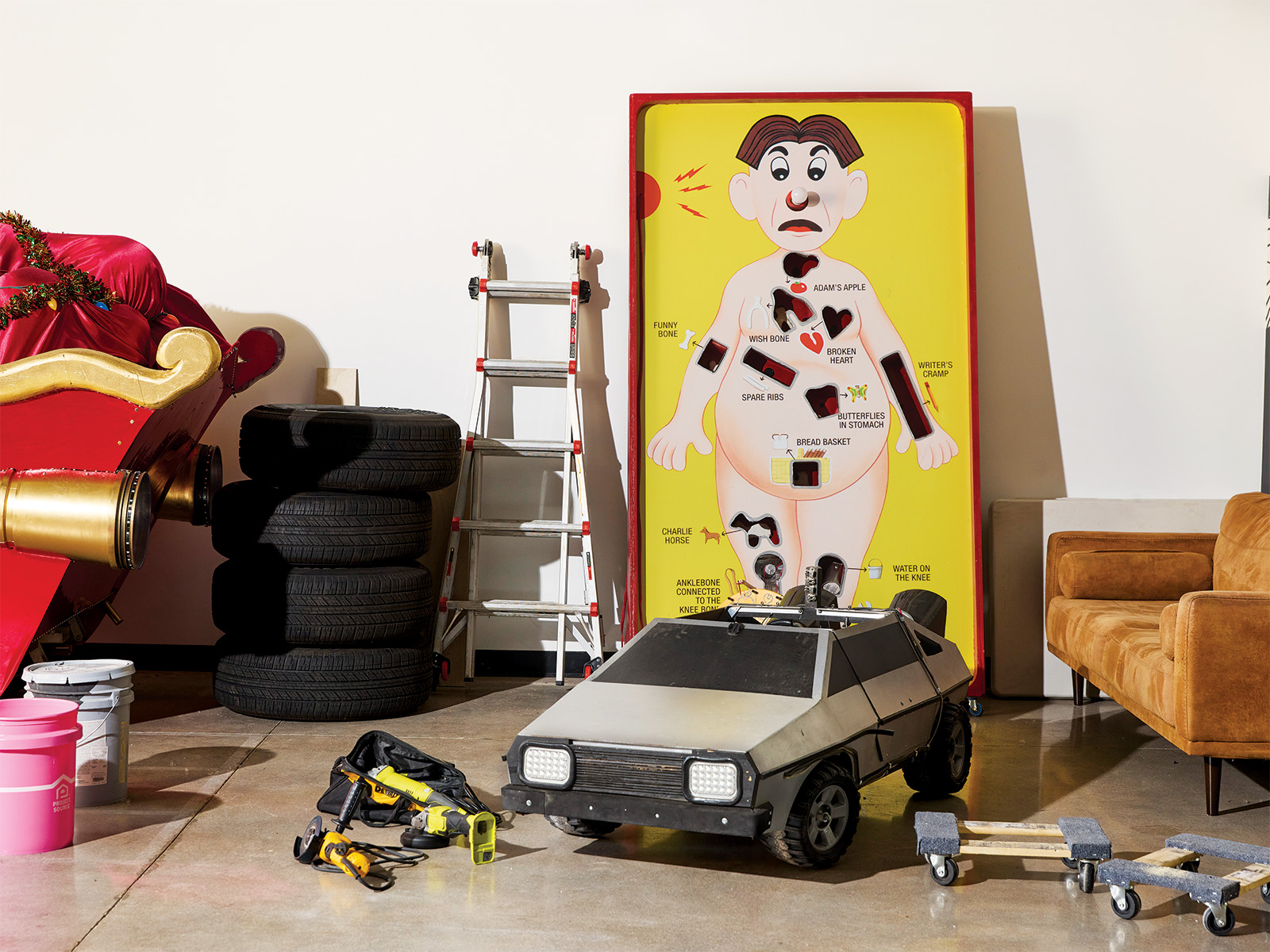
On the first floor, below where Taylor sits now, studio props fill the space, hinting at how those ideas might materialize. A golf cart has been retrofitted into an elaborate Santa sleigh. A 10-foot hammer is propped against a wall. A four-foot-long Nintendo controller rests on a support beam above the back door. There’s also a closet full of clothing and wigs for the many characters (men, women, children, Colorado transplants) Taylor plays online.
Members of Taylor’s team trickle in as he takes stock of everything that has to get done before he leaves the next day for a road trip with his family. DJ Cosgrove, his business partner and longtime friend, needs two minutes to talk merch. Brand and concept manager Matthew Berkenpas, a film-school buddy, gives an update on upcoming events (a brand partnership with Lowe’s will require Taylor to travel to Indianapolis). Ben Shumate, who’s been working with Taylor for four years, spitballs ideas for a road-trip sketch they could film that morning.
As they workshop the plot, Heidi Calmus, an undeniable star in the Dude Dad universe, arrives at the office and joins the fray. Should they film a Mom vs. Dad road-trip video? She doesn’t think so, she tells Taylor, her husband of 15 years. She suggests something about travel hacks instead. She’s brought puke bags, portable potty liners, and a Bop It along. Eventually, the group pivots to an even simpler theme: a skit comparing kids in the car today to the 1990s.
“We have to pick the kids up at noon,” Taylor says. “So we should just go to the house right now and start filming.” Twenty minutes and less than two miles later, the crew reassembles in the Calmuses’ driveway. Taylor, wearing jeans, a green henley, and a Dude Dad hat, says he needs to look more like a kid. He disappears into his house and emerges in a turquoise hoodie. He and Berkenpas set up a comical number of iPads and smartphones in the back seat of Heidi’s Chevy Tahoe, where Taylor—now playing a bratty modern child—complains that he’s bored. That prompts Heidi, the brat’s mom, to enter the frame lugging a flat-screen television and hand it to her “kid” in the back seat.
After a few takes, they film another scene. Taylor now plays a pre-tablet-era child watching rain droplets move across the back window, enthralled as one travels its full length without dispersing. (Shumate pours water on the window and uses a leaf blower to simulate a vehicle driving through a storm.)
They stitch the two scenes together, add sound effects, and post the 18-second short on Facebook with the caption, “We had it made in the ’90s.”
The video gets 39 million views.
Popular culture abounds with modern dad stereotypes—the dad who wears his cargo shorts too long, pulls his tube socks up too high, and tugs on bulky sneakers and a short-sleeve button-down to stroll down his suburban sidewalk and admire the neighbor’s lawn. The dad whose midsection is paunchy, whose grill is his dearest companion, and whose heroes are field generals from wars decided long before his time.
Often, those tropes ring true. But so does this: Today’s dads are told implicitly, and sometimes explicitly, that the steady creep of fatherhood will overcome them. That as they navigate new hurdles (diaper changes, nap schedules, swim lessons, tantrums), it will be difficult to maintain close friendships, make time for hobbies, and stave off the epidemic of loneliness that has engulfed their gender. That it will be hard to focus on anything other than raising children, the most consequential project of their lifetimes—a project that has been bungled by so many previous generations of men that the word “issues” will forever be linked with the word “daddy.”
Not every dad will acquire New Balance footwear. Or pleated khaki trousers. Or an obsession with the Battle of the Bulge. But many will wake up one day and realize they’ve lost sight of what they once thought made a man cool.
Before Taylor was counting views by the million, before anyone knew him as Dude Dad, and before he had a book deal, brand partnerships, sold-out shows, and fans recognizing him on the street—before all that, he was an expectant father terrified of succumbing to the stereotypes. “I didn’t want to lose track of who I was,” he says. “I didn’t want fatherhood to make me into a different person right away. I didn’t want to become what we would now consider the basic dad.”
But as his content has evolved, Taylor has evolved, too. Having released 1,500 Dude Dad videos and welcomed four children into the world, having become at least internet famous and maybe even famous famous, Taylor has learned a universal truth: that even in the make-believe world of social media, you can’t escape reality.
As he approaches 40, Taylor is still thin with an athletic build and a frenetic off-camera energy that nearly matches that of the characters he plays online. It’s not hard to imagine him as the child he once was, launching his bike off homemade ramps with his older brother in a cattle lot near Howard, South Dakota (population: 848). The higher he could fly, the cooler he would be.
When not building jumps, Taylor was setting out on family hunting, fishing, and snowboarding expeditions. He was a natural entertainer, too. “He was always pulling pranks and trying to get a laugh out of people,” says Larry Calmus, Taylor’s dad. Larry, who works as a traveling construction equipment salesman, remembers Taylor standing on a footstool in their living room with a little guitar and belting out Billy Ray Cyrus’ “Achy Breaky Heart.”
Taylor’s mom, Julia, says he was goofing around constantly—even when he shouldn’t have been. But once Taylor found his thing, he found focus. That thing was acting. In high school, he participated in almost every play (the Scarecrow in The Wizard of Oz numbers among his many credits). “In a school that small,” Julia says, “his ability really stood out.”
His talent earned him a scholarship to the University of Sioux Falls, where he majored in theater. He met Heidi there when a friend paired them together for a flirty one-act play. They dated casually until Taylor moved to Los Angeles in 2009.
In California, Taylor doubled down on the things he loved. As he grinded the Hollywood circuit and tried to become a professional actor, he made time to ride bikes and hit ever larger BMX features. “Taylor was one of the few dudes who would just sit around and build jumps with me,” Cosgrove says.
He was serious about his professional craft, too. Berkenpas recalls Taylor was always developing zany characters. When Taylor arrived in Los Angeles, he lived in a two-bedroom apartment with Berkenpas and three other guys. (To accommodate everyone, they added a third level to an existing bunk bed.) “I came home from work one day after he had just moved in,” Berkenpas says. “On the closet floor was a pair of bright pink high-heel shoes. I thought, Well, Taylor’s here.”
Heidi joined Taylor in California a short time later, and they married in 2011. Their early years together were lean. Taylor landed a job as the supervisor for an apartment building, which paid him almost nothing but gave them free rent. Heidi worked for a nonprofit that helped victims of human trafficking. Together, they made less than $20,000 during the first year of their marriage.
But with a flexible schedule Taylor could audition for roles and found a little success, appearing in the ABC sitcom The Middle and in 10 sketches on Jimmy Kimmel Live! In one, he played a stereotypical white guy looking for Black friends through a matchmaking app called Brothr. He also filmed comedy bits and uploaded them to YouTube on a channel he called Briefs TV. For “Homemade Hot Tub,” he and a friend sat knee-to-knee in a small bathtub and used an air compressor to create bubbles. Those videos never attracted more than a couple of thousand viewers.
Then, in 2015, Heidi got pregnant. With his acting career stalled, Taylor feared he’d have to give up on his dream and search for stable employment. “So, I thought, I’ll just make my own creative outlet, and then when I end up working in construction in the Midwest I’ll have something that makes me feel good at night. Besides Heidi,” he explained in a recent Dude Dad video.
That December, just weeks before Taylor and Heidi’s oldest son, Theo, was born, Taylor launched Dude Dad. It was billed as a weekly vlog focusing on his journey as a parent, with the first episode titled “Things NOT to Say to Your Pregnant Wife.” Among them: “Sooo, what’s up with your nipples?”
The channel focused on Taylor’s desperate attempts to maintain an identity as a cool guy while being an engaged and authentic father. (He originally wanted to call it Rad Dad, but the handle was taken.) He made a dirty diaper slingshot; he dressed his toddler like Evel Knievel and put him in a toy truck. Among the most memorable of the early videos was one in which he and Larry wore camo jackets and filmed a mock father-son hunting expedition in Taylor’s living room. Their quarry? Theo. (The whole thing was pretty harmless: They lured the infant into an Amazon box.)
The videos also filled a gap online. “I knew I was doing something that hadn’t been tapped yet,” Taylor says. “There was a lot of content for moms. There wasn’t much for dads at all.”
Despite the audience potential, Dude Dad was initially just another low-paying side gig. Taylor was posting about one video a week and had about 2,000 followers after the first year. Then, in 2016, he lost his position at the apartment building. “I lost my job and our housing at the exact same time. I was selling rights to the videos for like $200 a pop [to other websites]. I was working set construction and still trying to audition. I was trying to be a good husband and father,” Taylor says. “I was overwhelmed. I broke down to Heidi.”
She told him that whatever he did next, he couldn’t give up on Dude Dad. “It just felt like not a question,” Heidi says. “He was alive. He was excited. Even if it wasn’t going to make money, it still needed to be something.”
Today on the Dude Dad website, you can purchase a book titled A List Of Times My Wife Was Wrong. Every page is blank.
Taylor and Heidi had their second child, a girl named Juno, in 2017. The brand’s Facebook page hit one million followers the following year. Taylor’s videos, increasingly featuring Heidi and DIY projects, routinely racked up millions of views. And because of the way Facebook monetized video content at the time, Dude Dad became lucrative. The follower counts kept climbing. So did the income.
He collaborated on videos with other internet personalities and comedians like Charlie Berens, Penn Holderness, and Myles Montplaisir (the You Betcha Guy). One of their most popular sketches, “Husbands of Target,” features the four creators tailgating in the department store’s parking lot while they wait for their wives to finish shopping.
With financial flexibility, the Calmuses had an opportunity to re-evaluate what they were doing and where they were doing it. They didn’t want to raise their kids in Los Angeles, so they scouted other locales. They considered Tennessee and Minnesota, until Berkenpas and his wife—who had moved to Fort Collins in 2012—convinced them to choose Colorado. “We were a landing pad for him and Heidi,” Berkenpas recalls.
In 2020, just as the COVID-19 pandemic was arriving in the United States, Taylor and Heidi bought a house sight-unseen in a cul-de-sac in Fort Collins. Cosgrove, who had become an essential part of the Dude Dad production, followed a few months later with his family. It was in Colorado that Dude Dad went supernova.
Amid stay-at-home orders, millions of doomscrolling parents discovered Taylor’s refreshingly buoyant take on fatherhood. The buzz around Dude Dad resulted in a show called Super Dad on the Magnolia Network (started by Fixer Upper stars Chip and Joanna Gaines) that ran for two seasons, both in 2021. In each episode, Taylor would team up with aspiring DIY dads on projects like treehouses and obstacle courses, which would later be revealed to their kids.
In Fort Collins, the Calmus house became center stage on the Dude Dad channel, especially as Taylor undertook ever more ambitious renovation projects, including adding an entire addition to the front of their home.
With an eye on growth, Cosgrove helped Taylor launch a line of merchandise that became enormously successful, helping to stabilize the brand against mercurial algorithm changes. Taylor unveiled a fictional business called Couple More Days Construction, appearing in videos to explain his many behind-schedule renovation efforts. They started selling a T-shirt with the fake company’s logo, which Cosgrove says was so popular the profits helped cover a big chunk of the cost of buying and building out the Fort Collins production office.
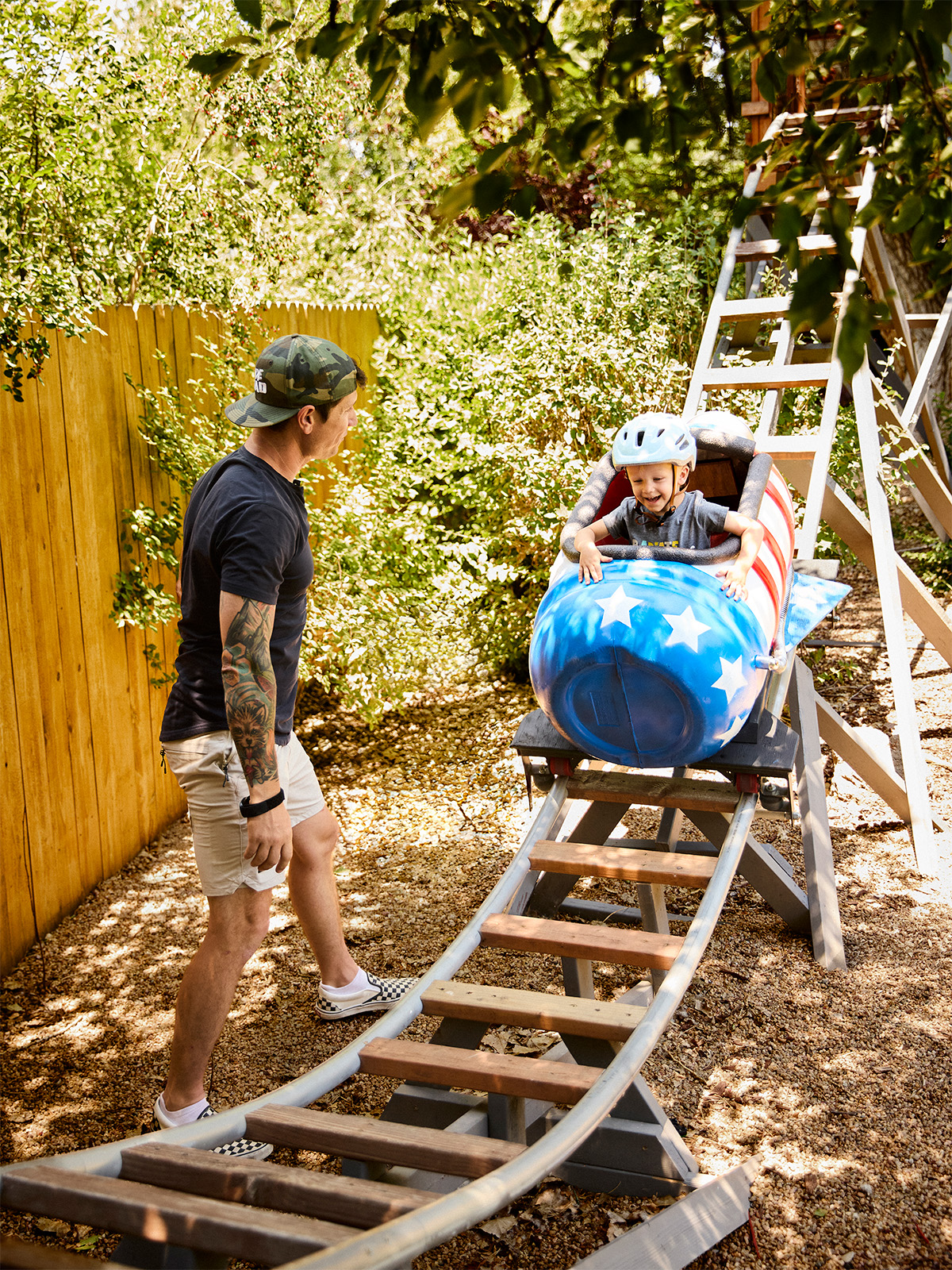
All the while, the Calmus family kept growing. Two more boys, Otto and Kelso, gave Taylor and Heidi twice the inspiration for parenting content. Taylor wrote three books, including one for children: Dad and the Recycling-Bin Roller Coaster. Shortly after it was published, life imitated art. He built a real recycling bin roller coaster for his kids in his backyard.
As Dude Dad grew, Taylor and Heidi’s fame grew with it. Larry Calmus recalls an elk-hunting trip he and Taylor took near Rifle three years ago. They stopped at a roadside bar for lunch, but it was closed. As they walked back to their truck, a woman, recognizing Taylor, opened the door and said: “You’re effin Dude Dad!” She let them in.
“It still amazes me. I should be used to it by now,” Larry says. “Even in a little town in the middle of nowhere, people know exactly who he is.”
Taylor and Heidi have capitalized on their digital reach with a series of live standup shows that have only amplified their public profile. This year, they did a run of 23 performances in 12 cities with a two-night, three-show finale at the Boulder Theater, where they filmed a special that will soon be released on YouTube.
At the last Boulder show, billed as an after-hours “parents night out” experience, lines wrapped around the building before the doors opened. Cosgrove got the crowd warm, followed by Colorado comedian David Rodriguez. By the time Taylor took the stage, the sold-out theater was raucous. He told jokes on topics his followers know well: gentle parenting, toddlers covered in poop, Colorado natives, his vasectomy. He engaged the crowd—at least 50 percent women—in a game of “Basic Mom Bingo.” The winner received a $25 Target gift card.
But the biggest laughs—and the show’s climax—came as Heidi walked onstage. After running through a short set, she sat down at a piano and sang about Taylor’s tortuous home renovations to the tune of Leonard Cohen’s “Hallelujah,” with a backing band and choir to boot.
“I was taken away by the fact that she did that whole performance,” says Laura Schmid of Erie, who attended the show with her husband, Brian. “I had no idea she could sing or play a keyboard.” Schmid became a Dude Dad fan when Taylor showed up in her Facebook feed about a decade ago. “And at the end of the day,” she says, “when the world is as crazy as it is, you just want to sit down and laugh out loud. He helps me do that.”
Schmid, who has a 12-year-old daughter, raced to get tickets when she saw Taylor and Heidi were performing in Boulder. Her husband wouldn’t have. He wasn’t a fan—not until attending the live show.
This dynamic isn’t rare. “Our target demographic from the stats is undoubtedly moms,” Cosgrove says, noting that the intent is to get fathers motivated, but often women will see the videos first. It doesn’t surprise Schmid that so many moms watch Dude Dad. “He’s always doing stuff around the house to make it better and easier for Heidi and the children,” she says. “A lot of us moms want to sink into bed and unwind with something we can relate to.”
To keep and grow his audience, Taylor has changed Dude Dad’s programming over the past decade. There’s less baby content and more DIY videos, plus an increasing focus on nostalgia and Colorado stereotypes. Sometimes, Taylor just sits in front of the camera and talks about the blessings of marriage, the challenges of parenting, and the joys therein.
Technical aspects have changed, too. Short-form video was just emerging when he got into the digital creator game. His early videos were elaborate. Some of the new ones are, too, but he also knows an 18-second clip might attract a larger audience than an eight-minute production. He also has more competition now.
When Dude Dad debuted, he was one of the few father-focused creators on social media. Today, he’s one of many—a crowded field that includes Rob Kenney (Dad, How Do I?), who produces how-to videos on everything from car maintenance to plunging a toilet; Trey Kennedy, a sketch comic documenting the parenthood experience; and Sergei Urban, a stay-at-home dad who posts videos on TheDadLab channel about projects dads can do with their kids.
“When you have more creators, the content has to get sharper in order to stand out, and in one way it’s getting better,” Taylor says. “But it’s also getting worse. The platforms have essentially given us permission to take other people’s ideas and rip them off. You might have a banger video, and then someone might do the exact same thing.”
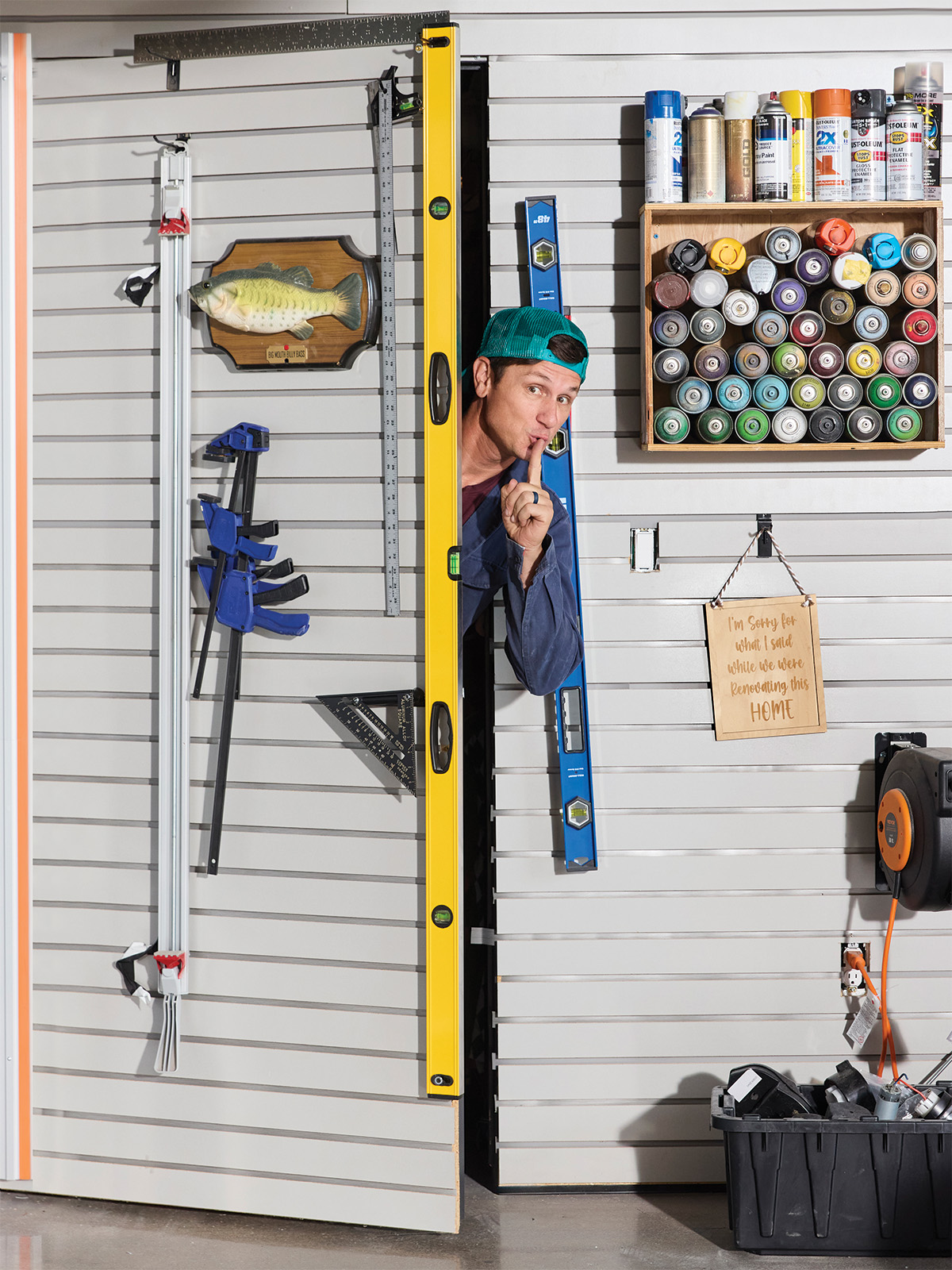
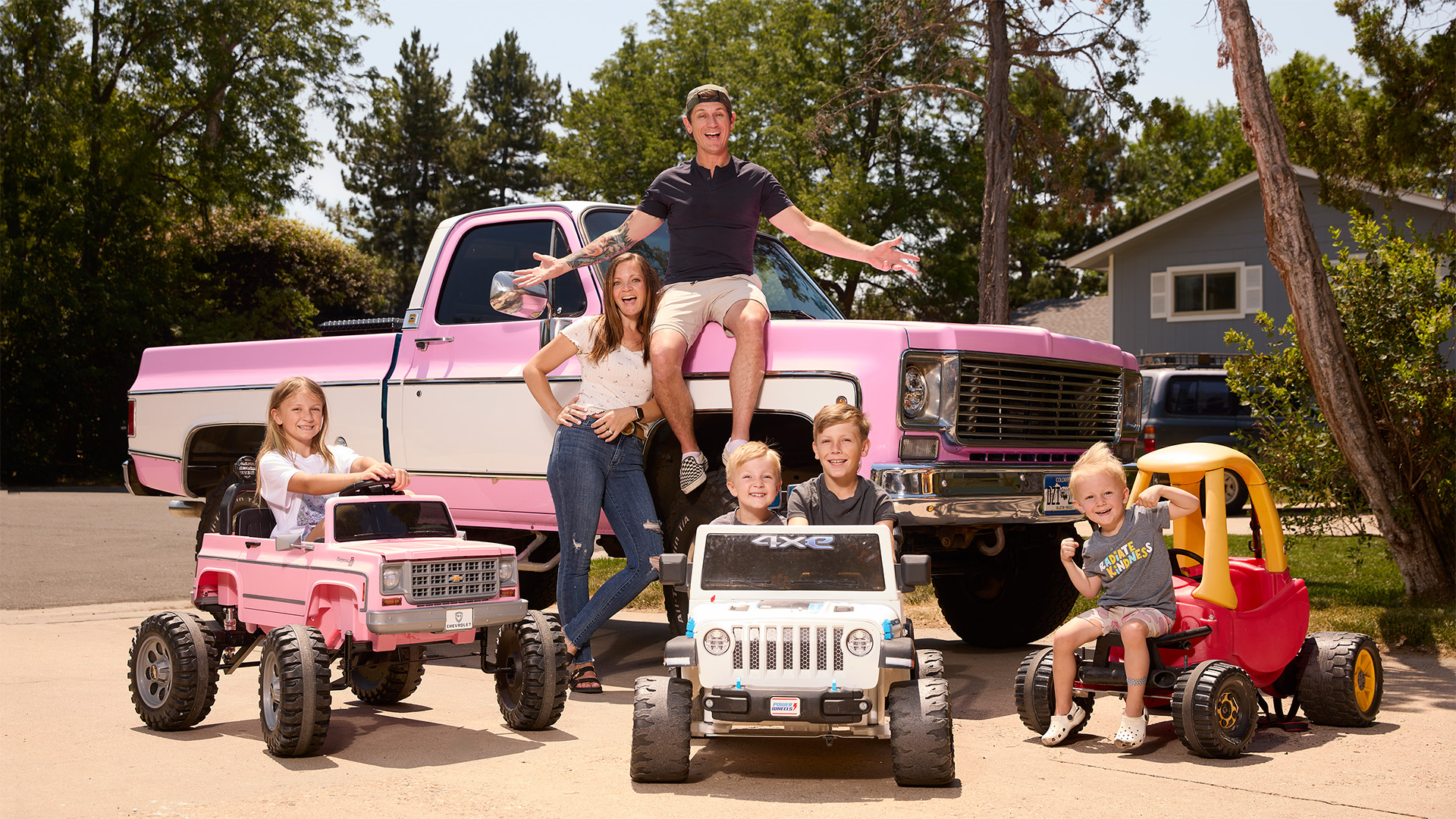
Based on appearances, Taylor’s quest to preserve his dudeness has gone quite well. There are no fewer than 10 bikes in his garage; there’s a lifted 1978 Chevrolet Scottsdale truck (which Heidi and the kids wrapped in pink vinyl) parked in his driveway next to bike ramps; there are snowboards sitting in his office; there’s a roller coaster in his backyard. He has a sleeve tattoo. And a boat. An objective observer would look at all this and regard him a bona fide dude.
On the other hand, time seems to have caught up to Taylor. Recently, he heard Gen Z influencers talking about how the new dad shoes are Vans—which is the brand he wears. “I was like, ‘Oh, my God. I became a basic dad,’ ” he says. “Not because I changed, but because generations have changed.”
And a casual scroller might land on Taylor’s feed and wonder whether he’s defied the basic-dad stereotype at all. Men waiting while women shop, a book on dad jokes, and incompetent home-improvement projects don’t exactly shatter traditional tropes.
But in between clips of him using his pink truck to rip a mailbox from the ground and turning his kids’ Power Wheel Jeep into the Shaggin’ Wagon from Dumb and Dumber, Dude Dad reveals glimpses of depth. Three years after his first child was born, Taylor, looking straight into the camera, vented to his audience about having to constantly correct his kids—small things, like keeping their shoes off the couch and eating at the table. “I feel like I spend the majority of my day just ruining other people’s fun,” he says in the video.
To prove his father’s point, Theo then begins jumping into the bottom of the frame. The pained smile on Taylor’s face (it never quite reaches his eyes) as he watches his son disrupt his work is an expression every toddler parent has worn before.
Taylor now recognizes that the original goal behind Dude Dad was short-sighted. “I was young and naive and didn’t really understand what I was talking about,” he says. “I was naive in thinking that I would always be able to make it fun. That’s not real.”
Of course, what constitutes reality on social media is up for debate. Even his most loyal followers probably don’t understand all that goes into running a media company and being a dedicated parent at the same time. “We balance this line of people either wanting to know what I do for a real job or thinking I’m a quadrillionaire like MrBeast,” he says. “It’s very much neither of those.”
Many followers believe he actually owns a business called Couple More Days Construction and makes videos in his free time—all the while raising four kids. “Who would hire that company?” Taylor asks. “I spend all my days talking about how bad we are.”
Taylor and Heidi have had trouble recognizing the boundary between their personal and professional lives in the past, too. During family activities, they found themselves wondering: Are we doing this for fun? Or is this for content? “In order to be a better dad I needed to make less stuff with them,” Taylor says. “I didn’t want them to have cameras in their faces all the time.” Taylor and Heidi are trying to shift away from videos that feature the kids and lean harder into sketch comedy. They also don’t film on weekends—it’s family time.
But while pre- and post-production happen in the office, many Dude Dad videos are still shot at their house. It’s the great irony of Taylor’s success: By trying to protect his identity from succumbing to fatherhood, he released a social media monster that ensured being a parent would consume every aspect of his life. “In the beginning,” he says, “I was more dude and less dad.” Now, for better or worse, he’s all dad.
Read More: Meet the Michael Jordan of Babysitting