

The Local newsletter is your free, daily guide to life in Colorado. For locals, by locals.
“Fino sherry is my secret weapon,” says Max Gellmann, lead bartender of the recently opened Casa Juani on Boulder’s Pearl Street Mall. “Instead of MSG or saline solution, which some bartenders rely on to liven up their cocktails, I use fino, which is made from grapes that are grown by the sea. The salty sea air flavors the grapes; it seeps into the barrel as the wine ages.”
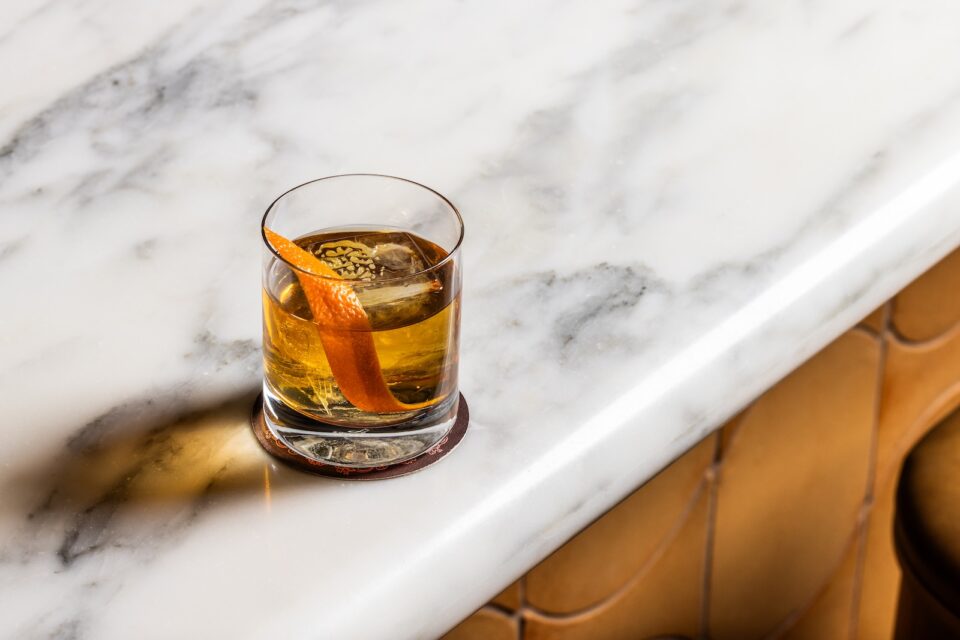
We are both admiring the drink he has set before me: the Spanish martini, Casa Juani’s signature cocktail. Gellmann greets his guests at the bar in a comfortable cardigan, his hands in its pockets as if he’s the proprietor of an antiquarian bookstore. “It’s put together with the three powerhouses of the Spanish bar: gin, sherry, and cask-aged vermouth,” he says. “And it bucks the [dry martini] trend—it’s a sweet martini.”

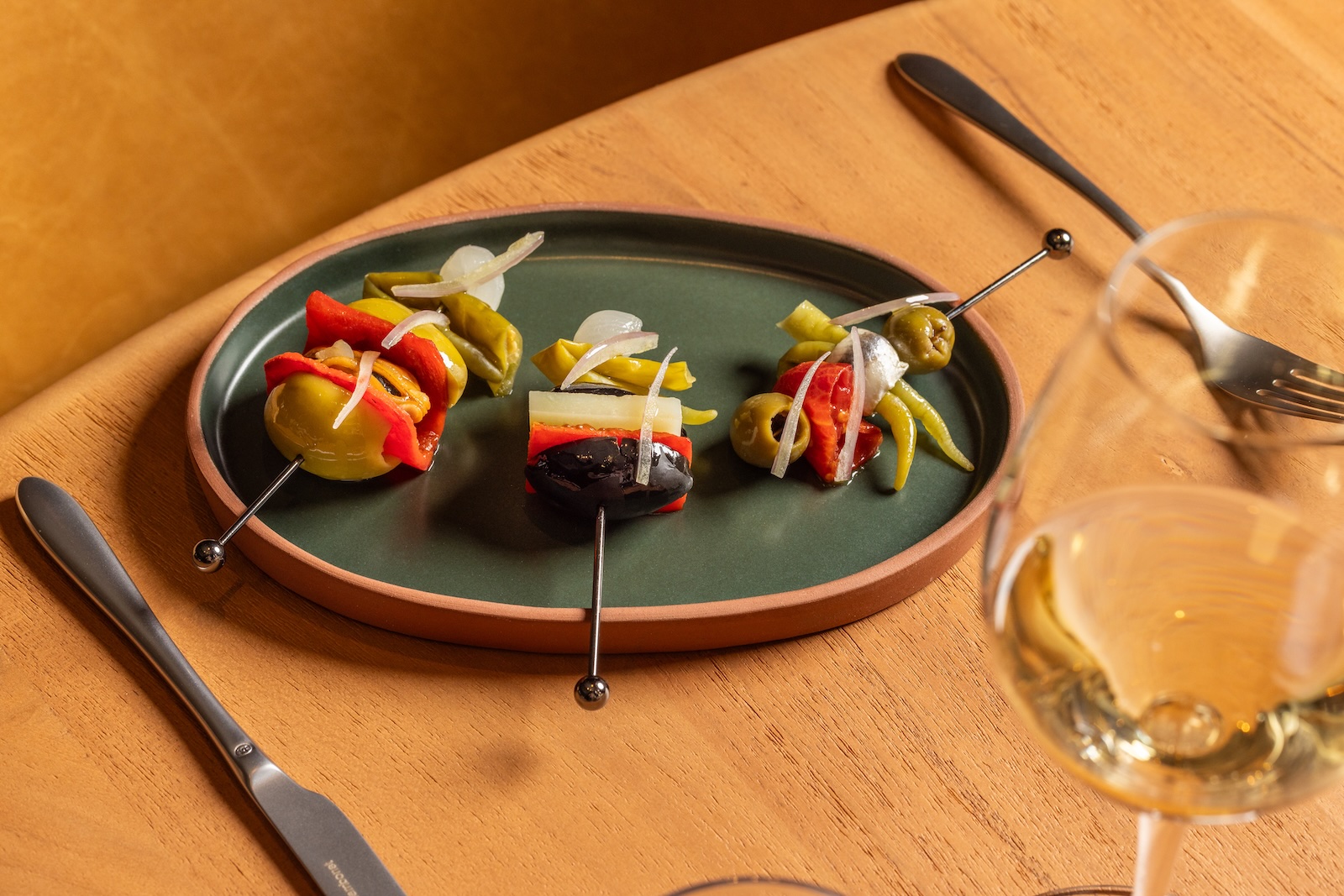
The Spanish martini’s ancestors are two pre-Prohibition vermouth and sherry cocktails: the Bamboo and the Adonis. Gellmann’s version adds Spanish overproof gin, and instead of an olive or lemon twist as a garnish, he uses a traditional Basque pintxo called a Gilda (a workhorse on any Spanish tapas menu). The skewer holds a meaty Gordal olive, a pickled anchovy, and sweet piquillo and sharp piparra peppers—a smoky, tangy, briny combo soaked in boozy aromatics.
In case you haven’t heard, there’s a sherry revival going on, at least on the East and West coasts. “It’s bartenders, not sommeliers, who are responsible,” Alex Greenberg, Casa Juani’s lead sommelier, says. (Talia Baiocchi’s James Beard Award–nominated book, Sherry: A Modern Guide to the Wine World’s Best-Kept Secret, with Cocktails and Recipes—with a forward by Spanish celebrity chef José Andrés—may be responsible for the resurgence.)
Sherry is an oak-aged, fortified wine produced exclusively in and around Jerez, Spain. A bar staple in Great Britain, it has at times punctured the American cultural fabric: Thomas Jefferson loved sherry and was partial to fino. In Edgar Allan Poe’s “A Cask of Amontillado,” the promise of a rare sherry is used to lure a character to a gruesome ending. And Marilyn Monroe’s Lorelei Lee drinks sherry as an indicator of her social-climbing ways in Gentlemen Prefer Blondes.
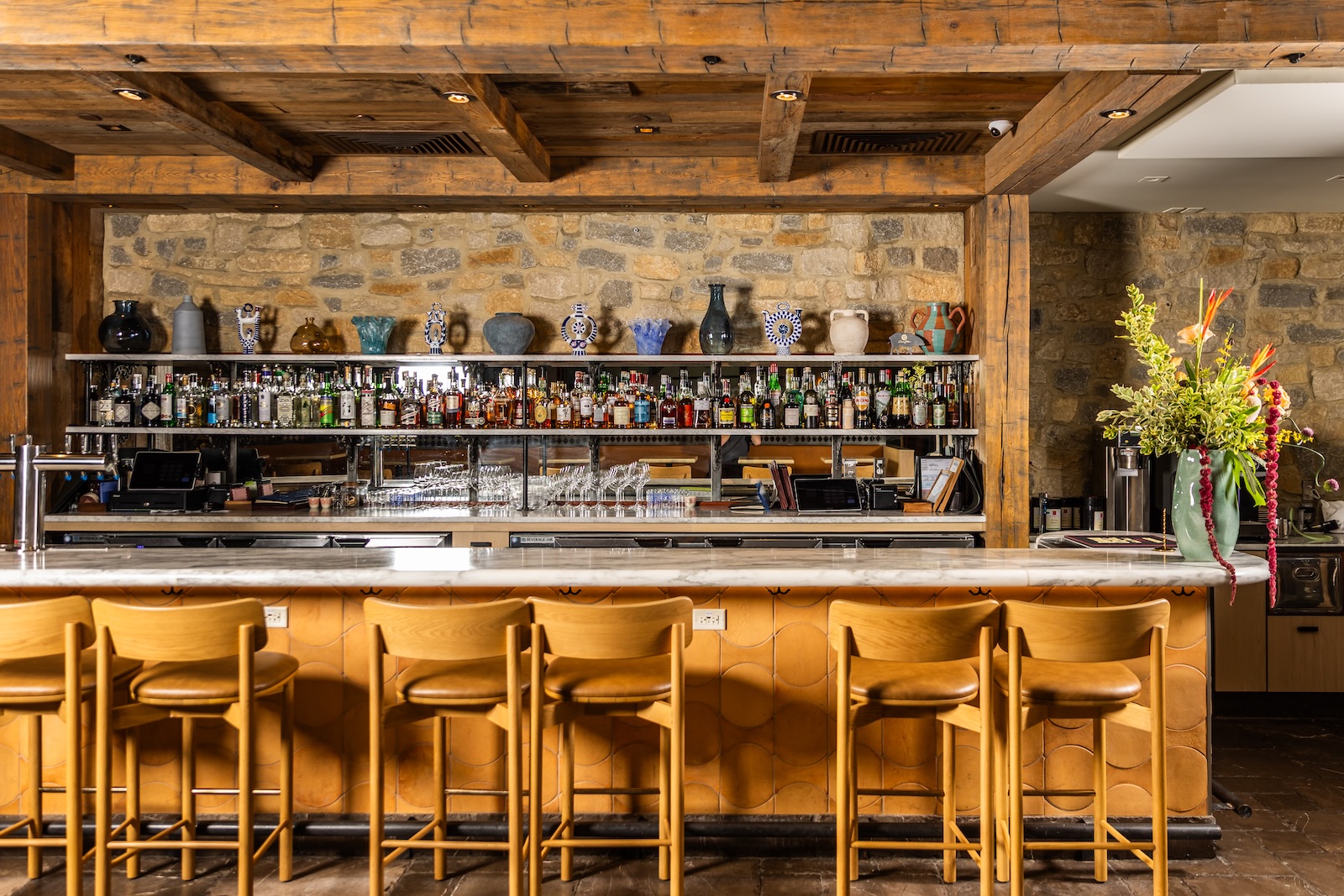
By the late 1980s, though, sherry had fallen out of favor because of changing demographics and a glut of poorly made products like cream sherry, the Nickelback of fortified wines. (I can remember a bottle of the stuff gathering dust on my grandparents’ liquor cart.) The current resurgence comes with a wave of interest in Spanish cuisine, exemplified by Casa Juani. Chef and co-owner Eduardo Valle Lobo (who named the eatery after his mother) shares Gellmann and Greenberg’s goal of providing the most Spanish experience possible. Valle Lobo imports whole legs of Ibérico ham, Valdeon blue cheese, and Kas limon soda. When he couldn’t find Spain’s Mahou-San Miguel lager here, he asked Avery Brewing Company to re-create it for him. The result is Juani’s Spanish Lager, available only at the restaurant.
Part of the Spanish experience is food matched with sherry in all its varieties (well, except cream sherry). “You want to drink sherry at the beginning or the end of the meal: fino, oloroso or amontillado with tapas and Pedro Ximénez with dessert or cheese,” Gellmann says. Equipo de Navazos’s La Bota De Fino, dry and light with notes of lemon, apple, and salt breeze, pairs well with the chef’s trio of Gildas—especially the one that comes with a poached mussel. Meanwhile, the Don Gonzalo Oloroso VOS, weightier and darker than the fino, has notes of oak, tobacco, and a pronounced nuttiness that complements Ibérico ham, bringing out the flavor of the acorns the pigs eat.
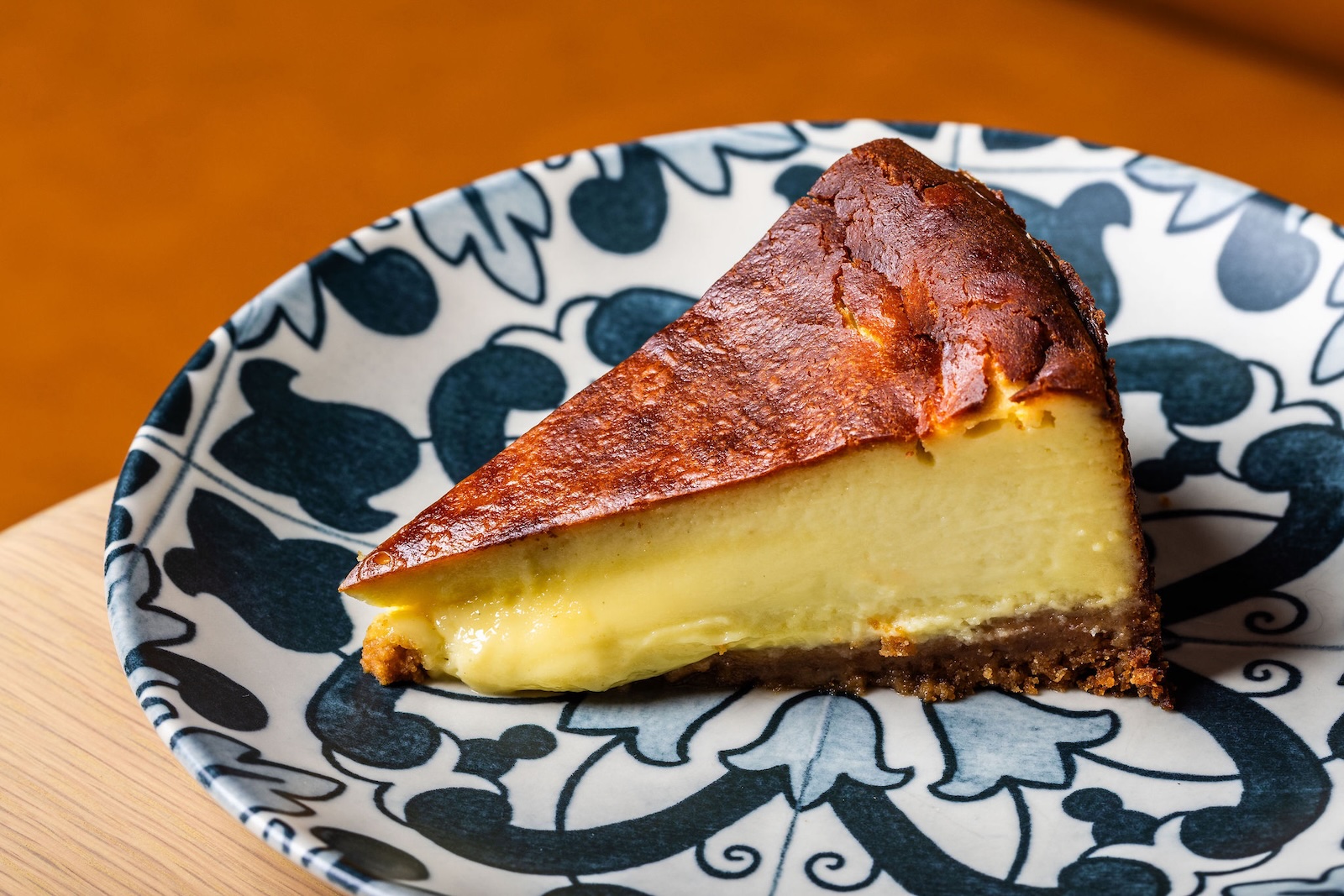
For dessert, I take Gellmann’s advice and try the El Maestro Sierra Pedro Ximénez with Casa Juani’s already famous Basque cheesecake, which is served ungarnished on a blue-and-white plate that mimics Spanish tile. Valle Lobo’s iteration goes light on the obligatory, deeply caramelized top but adds a secret ingredient: peppery, funky Valdeon. There’s just enough of it in the cheesecake to give the dessert a complex savoriness that undercuts the honey, chocolate, and cola notes of the sherry. Alternatively, you could pour the Pedro Ximénez over vanilla ice cream, affogato-style (something they’re also doing up the street at Corrida).
Gellmann admits that the breakout hit at the bar is the Spanish martini; straight sherry is still a hard sell. But he’s hoping to show guests the depth and versatility of the storied beverage, one table at a time. “I’ll give them a little taste with their tapas or dessert,” he says. “It’s really the best way to break the ice.”
Casa Juani is located at 901 Pearl Street, Boulder, and is open from 4 to 9 p.m. on Wednesday, Thursday, and Sunday, and from 4 to 10 p.m. on Friday and Saturday. Reservations are recommended.